Home loans at Prestige Parklane: APF, RERA and when a bank disburses
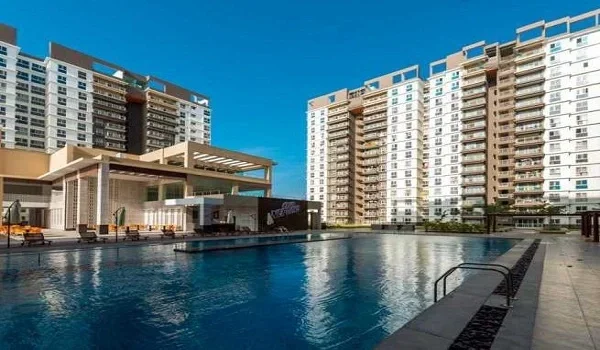
Updated 16 September 2026. Prestige Parklane is now registered under PRM/KA/RERA/1251/309/PR/150926/008941. That clears the main obstacle to lending. The sequence still matters, because APF is a separate step from registration.
A buyer asked a sharp question this week. If a project has only just been registered, will a bank lend against it yet? It is the right question, and the answer has two halves. Banks and buyers are looking at two different things.
The short answer
A bank lends against a project it has approved, not against a project that merely exists. That approval is called APF. It is granted per project, after the lender's legal and technical teams clear the title and the sanctions.
No APF, no disbursement, whatever your own credit profile looks like. You can be sanctioned as a borrower well before the project is approved. The two are separate events. People routinely conflate them, which is how buyers end up holding a sanction letter they cannot draw on.
APF, and why it matters more than your salary slip
Approved Project Finance is a lender saying: we have looked at this development, the land title, the approvals and the developer, and we will fund apartments in it. Once a project carries APF with a bank, individual loans move quickly. The project side of the file is already done.
Before APF, the same bank will still assess you personally and may sanction on your income. What it will not do is release money to the developer. So the useful question to put to a lender is not whether they will give you a loan. It is whether this project is on their APF list, and if not, whether the file has been submitted.
Where RERA registration comes into it
Most lenders will not complete an APF file on a project that is required to be registered and is not. Registration puts the declared plans, approvals, land title and completion date on public record. The legal team's job is considerably easier once that exists. For Parklane, that step is done. The filing now shows:
- The promoter: Apex Realty Management Private Limited.
- The approving authority: KIADB.
- The sanctioned plan: DO3-KIADB-00128/26-27/BP, approved 13 August 2026.
- The declared completion date: 31 December 2030.
So the practical sequence is now registration, done, then APF with each lender, then disbursement. Ask each bank where it is in that middle step.
The land question a lender will ask here
This project sits on KIADB allotted land inside an industrial area. That is not the same tenure as ordinary revenue or BBMP land. Every bank's legal team will look at it. It is a fair question to have an answer to before you sit in front of them.
It is not a defect. Apartments on KIADB land are financed routinely. But the file can take a little longer, and some smaller lenders sit it out.
The disbursement mismatch every Parklane borrower should understand
This is the most important practical point on this page, and it follows directly from how the payment plan is built.
Banks disburse against construction. At each stage the developer raises a demand, the bank sends a valuer to confirm the work is done, and only then does a tranche move.
The Parklane schedule is date-linked. Its 24 instalments of 3.2 per cent fall on fixed dates every two months, from 10 December 2026 to 10 October 2030, whatever stage the building has reached. When construction keeps pace with the calendar, those two line up and nobody notices.
When construction runs behind the calendar, they do not. A demand can fall due on its date while the bank's valuer finds less work done than that demand implies. The bank may then release less than the developer is asking for. The difference comes from you.
How to protect yourself
- Ask each lender directly how it disburses on a date-linked schedule, and what happens if a demand runs ahead of construction.
- Hold a liquidity buffer. A few instalments' worth of cash covers a temporary gap without a missed payment.
- Read the late-payment clause in the agreement, because a shortfall you did not cause can still attract interest.
- Watch the quarterly RERA updates, which show certified progress you can compare against the calendar.
Three more consequences worth planning for
Your own money goes first. Banks fund up to 75 to 90 per cent of the agreement value depending on ticket size, and expect your contribution invested before their first rupee. At Parklane, the 10 per cent on booking and 10 per cent on agreement together form a natural 20 per cent down payment.
You pay interest on what has been drawn, not on the sanction. That is pre-EMI, and it runs for the length of the build. On a ₹52 lakh loan for a ₹65 lakh home, that pre-construction interest comes to about ₹8.3 lakhs by the December 2030 completion. It buys no equity.
Tax relief on that interest is deferred, and often absorbed. It is claimed in five equal instalments from the completion year, under a ₹2 lakh ceiling that ordinary interest may already fill.
Home loan eligibility: the income each configuration needs
Lenders test affordability with FOIR, the share of monthly income that goes to all your EMIs. Most cap it between 40 and 50 per cent. Here is what that implies at Parklane, on an 80 per cent loan at 7.75 per cent over 20 years, assuming no other EMIs.
| Configuration | Loan | EMI | Monthly income at 50% FOIR | Monthly income at 40% FOIR |
|---|---|---|---|---|
| 1 BHK, ₹65 L | ₹52.0 L | ₹42,689 | About ₹85,400 | About ₹1.07 L |
| 2 BHK, ₹90 L | ₹72.0 L | ₹59,108 | About ₹1.18 L | About ₹1.48 L |
| 2 BHK Large, ₹1.15 Cr | ₹92.0 L | ₹75,527 | About ₹1.51 L | About ₹1.89 L |
| 3 BHK 2T, ₹1.50 Cr | ₹1.20 Cr | ₹98,514 | About ₹1.97 L | About ₹2.46 L |
| 3 BHK 3T, ₹1.69 Cr | ₹1.35 Cr | ₹1,10,992 | About ₹2.22 L | About ₹2.77 L |
| 3 BHK 3T Large, ₹1.89 Cr | ₹1.51 Cr | ₹1,24,127 | About ₹2.48 L | About ₹3.10 L |
Existing EMIs reduce eligibility rupee for rupee. A ₹15,000 car loan removes roughly ₹30,000 to ₹37,500 of the income headroom above. Adding a co-applicant's income raises eligibility, and if they are also a co-owner it can double the usable interest deduction too.
What to do before the survey form, not after
Allotment day is a poor time to discover your borrowing capacity. The work that matters takes a week.
- Get a pre-approval. An in-principle sanction tells you your ceiling before you pick a configuration, not after.
- Ask two or three lenders about APF on this project specifically. Then ask the developer's team which lenders have approved it, and compare the answers.
- Check your credit report yourself. A disputed card balance from four years ago is a two week problem if you find it early, and a deal breaker if you find it late.
- Price the loan on the full cost. Banks fund the agreement value. Registration at 7.5 per cent and the possession charges generally come from you.
- Decide the tenure honestly. A longer tenure buys a smaller EMI and costs a great deal more in total interest.
What a bank will and will not fund
| Cost | Typically funded by the loan? |
|---|---|
| Agreement value, up to the lender's percentage | Yes |
| Your down payment, 20 per cent at Parklane | No |
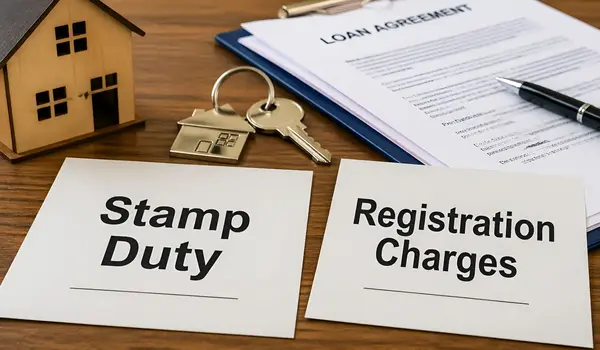
| Stamp duty, cess and registration at 7.5 per cent | No |
| Possession charges: BESCOM, BWSSB, generator, CAM, corpus | Generally no |
| Kitchen fit-out, since no counter or dado is provided | No |
On a ₹90 lakh 2 BHK, the unfunded cash beyond the down payment comes to roughly ₹10.7 lakhs across registration and possession charges.
Frequently asked questions
The project is RERA registered, so the main obstacle is cleared. A bank will disburse once it has granted APF to the project. Ask each lender whether Parklane is on its approved list.
Approved Project Finance is a bank clearing a whole project for lending after its legal and technical review. With APF, individual loans move quickly. Without it, your sanction letter cannot be drawn on.
Yes. Apartments on KIADB land are financed routinely, though the tenure differs from ordinary revenue land and some lenders take longer or decline. Ask about this specific project.
Typically 75 to 90 per cent of the agreement value, depending on ticket size. Registration and possession charges are generally not funded.
On a date-linked schedule, a demand can fall due before the bank's valuer confirms matching progress. The bank may release less than demanded, and you fund the gap. Keep a cash buffer.
No. It is date-linked, with 24 instalments of 3.2 per cent every two months from December 2026 to October 2030.