Selling before possession at Prestige Parklane: what getting out really costs
The survey form opens on 25 September 2026. The question we are about to get more than any other is the one nobody asks out loud at a launch. If this does not work out, or a better opportunity turns up in year three, can I get out? You can. It is slower, costlier and more conditional than most people assume. It is worth understanding before you commit rather than after.
The short answer
Before the sale deed is registered, you do not own an apartment. You own a contract to buy one. Selling that on is a transfer of the booking, not a sale of property, and it needs the developer's written consent. Nobody is obliged to give it, and where it is given it usually carries a fee. This is the single most misunderstood thing about buying at launch. It is why the word "resale" means two completely different transactions, depending on which side of possession you stand.
Two different exits
| Before registration of the sale deed | After | |
|---|---|---|
| What you hold | An allotment and an agreement to buy | Title to an apartment |
| What you sell | Your rights under that agreement | The property itself |
| Developer consent | Required | Not required |
| Typical cost | A transfer fee, often per sq ft | Ordinary conveyancing |
| Buyer pool | Small | Open market |
How a pre-possession transfer actually works
The mechanics are much the same across large Bengaluru developers.
You find the buyer. The developer will not market your unit for you, and generally will not let a channel partner list it as new inventory while its own stock is unsold. In a project releasing 1,788 apartments, that matters. For the first few years your unit competes against the builder's unsold inventory, and the builder can discount in ways you cannot.
You apply for consent. Send a written request naming the proposed transferee, with their KYC. The developer need not agree, and will usually refuse if your payments are in arrears.
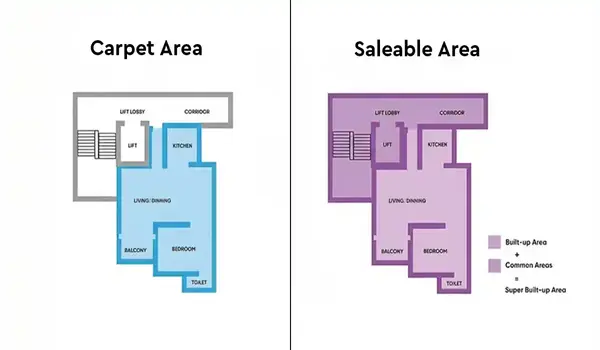
You pay the transfer fee. It is commonly charged per square foot of saleable area, and on a large apartment it is not trivial. Get the figure in writing before you plan an exit around it. It is set by policy rather than by your agreement, and it can change.
The paperwork is redone. Expect a tripartite deed of transfer or a fresh agreement in the new buyer's name. If a bank has funded you, the loan must be closed or taken over, and the bank's no objection certificate joins the file.
Keeping up payments matters more on this schedule
Developers usually refuse transfer consent when instalments are in arrears. On Parklane's schedule, that bites harder than usual. The plan is date-linked. Instalments of 3.2 per cent fall due every two months from 10 December 2026, regardless of construction progress.
So a buyer planning an exit cannot simply stop paying while they look for a transferee. Arrears build on the calendar and can block the very consent they need. Budget to keep paying until the transfer completes.
The tax, which is where the gain goes
Rights in an under construction apartment are a capital asset. Sell them and you are taxed on the gain. The holding period decides how hard. Hold for 24 months or less and the gain is short term, added to your income and taxed at your slab rate. For most buyers at this price level that is 30 per cent plus surcharge and cess. Hold longer and it is long term, taxed at the concessional long-term rate, with reliefs including reinvestment under Sections 54 and 54F.
The trap in the calculation
The clock generally runs from the date of allotment. And the gain is computed on the whole rights value, not on the instalments you have actually paid. Here is how that plays out on the real schedule.
| If you exit this long after a September 2026 allotment | You will have paid | Gain treated as |
|---|---|---|
| 12 months | About 36% | Short term |
| 24 months | About 55% | Short term |
| 36 months | About 74% | Long term |
Sell at 24 months having paid about 55 per cent, and the tax is assessed on the full appreciation, at your slab rate.
TDS on the transfer
On a transfer above ₹50 lakhs, the buyer must deduct one per cent under Section 194-IA and deposit it. Your buyer needs to understand the process too. The rules are on the Income Tax Department portal. Run the sums before you treat a pre-possession exit as a plan. Transfer fee, short-term tax at slab, brokerage, and the discount a private seller takes against builder inventory can between them eat an entire two year gain.
The thing specific to this project
Every point above applies to any launch booking in Bengaluru. One thing does not.
858 of the 1,788 apartments here are one bedroom, as the RERA filing confirms. If you hold one and want out before possession, you are selling into a pool where 857 near-identical units exist. A large share of them may still be the developer's to sell. That is the weakest position a private seller can be in. It is why a one bedroom bought as a short trade is a different proposition from one bought to hold.
The three bedroom variants sit at the other end. There are fewer of them, and a buyer is not choosing between 858 identical one bedroom homes. The 2 BHK is scarcer still, at 391 units. Scarcity in the mix is what makes an exit possible.
Transfer or cancel: which leaves you better off?
They are different exits, with different costs. It is worth comparing them before you choose.
| Transfer to a buyer | Cancel with the developer | |
|---|---|---|
| Who takes the unit | A buyer you find | The developer |
| You can capture appreciation | Yes, if the market has risen | No |
| Main cost | Transfer fee, brokerage, tax on any gain | Forfeiture under the cancellation clause |
| Speed | Depends on finding a buyer | Depends on the refund timeline in your agreement |
| Needs developer consent | Yes | It is itself a request to the developer |
If prices have risen, a transfer usually wins, because you keep the gain. If they have not, cancellation may cost less, because there is no gain to tax and no buyer to find.
What a buyer of your booking will check
A serious transferee does the same diligence as an original buyer, plus a few checks of their own. Have these ready.
- The original allotment letter and agreement, in your name.
- A statement from the developer showing every instalment paid and nothing in arrears.
- The developer's written consent to the transfer, and the fee.
- The bank's no objection certificate, if the booking was financed.
- The RERA registration, and that the promoter matches the agreement.
A clean, complete file sells faster and at a better price. A missing document turns an interested buyer into a hesitant one.
What to do at booking if an exit matters to you
- Ask for the transfer policy in writing before you pay. The fee, the conditions, whether transfer to a blood relative is treated differently, and whether there is a lock-in.
- Get the lock-in period stated. Many developers will not consider a transfer until a set proportion of the price is paid.
- Prefer a scarcer configuration if exit optionality is part of the case.
- Do not assume the allotment letter covers this. Transfer terms usually sit in the agreement or a separate policy. Ask for both.
And if you simply want your money back
Cancelling is not the same as transferring. You are asking the developer to take the unit back. What you recover depends on the cancellation clause you signed, not on what feels fair. Forfeiture of part of the booking amount is normal. The question is how much, and how quickly the rest is returned.
Because Parklane is RERA registered, under PRM/KA/RERA/1251/309/PR/150926/008941, the Act adds a separate withdrawal route. If the promoter misses the declared completion date of 31 December 2030, you may withdraw and recover the amount paid with interest. That is a right, not a negotiation.
Prestige Group Prelaunch Project is Prestige Parklane.
Frequently asked questions
Yes, by transferring your rights under the agreement. It needs the developer's written consent and usually a transfer fee, because until the sale deed is registered you hold a contract, not the property.
Expect one. It is set by developer policy rather than your agreement, commonly charged per square foot, and can change. Get the current figure in writing before you book.
Capital gains on the transfer of rights. Within 24 months of allotment the gain is short term, at your slab rate. Beyond that it is long term. Your buyer also deducts one per cent TDS above ₹50 lakhs.
About 55 per cent of the price, on the date-linked schedule from a September 2026 allotment. The tax is still assessed on the full appreciation.
Not yet. The project is registered, but allotments open through the survey form on 25 September 2026. Until bookings exist, there is no resale market to buy into.
It is risky. The schedule is date-linked, so arrears build on the calendar, and developers usually refuse transfer consent when payments are behind.