Under construction or ready to move: the GST point most comparisons miss
Two apartments, same corridor, same developer, similar specification. One is finished and you can move in next month. One completes in 2030 and costs materially less. The choice is not about patience. It is about which set of risks you would rather hold.
What separates them, in one table
| Under construction | Ready to move | |
|---|---|---|
| Price | Lower, and lowest at launch | Higher, a premium for certainty |
| GST | 5 per cent on agreement value, no input credit | None, once the OC is issued |
| Stamp duty | 7.5 per cent in Karnataka | 7.5 per cent in Karnataka |
| What you are buying | A drawing and a promise | The actual apartment, which you can stand in |
| Payment | Staged over years | Largely upfront |
| Rent while you wait | You keep paying it | Stops |
| Delay risk | Real, and the main risk | None |
| Choice of unit | Full choice of floor, tower and facing | Whatever is left |
| Appreciation during build | Accrues to you | Already in the price |
The GST point is bigger than people think
An under construction home carries 5 per cent GST with no input tax credit. A completed home sold after the occupancy certificate carries none. On a ₹1 crore purchase that is ₹5 lakhs. So a ready apartment at ₹1.05 crore and an under construction one at ₹1 crore cost the same at the counter. That is before you count the rent you pay while waiting, or the interest that accrues. Any comparison that ignores GST is not a comparison.
What under construction genuinely buys
Price, and choice. The earliest entry is the lowest price a project sees. First choice of floor, tower and facing is worth real money later. Floor rise alone runs about ₹30 per square foot per floor above the fifth. On a 24 storey tower that is roughly ₹9 lakhs between the sixth floor and the twenty fourth on a large apartment.
Staged payment. A staged plan spreads the cost over years, which suits a household whose income is rising.
The upside during construction. Any appreciation between booking and handover accrues to you rather than to the seller.
What ready to move genuinely buys
Certainty, which is not a small thing. You see the actual light in the actual room at the actual time of day. You see the finish quality rather than a specification sheet. You meet the neighbours and the association. You know whether the water works.
No delay risk. The single largest risk in Indian residential purchase simply does not apply.
No rent overlap. A household paying ₹35,000 a month in rent while waiting four years for handover pays about ₹16.8 lakhs of rent it will never see again. That belongs in the comparison.
How RERA changed the balance
Under construction used to be materially more dangerous than it is now. A registered project puts the land extent, the approved plans, the carpet area of every unit and a declared completion date on a public register. It also requires 70 per cent of buyer money into a separate account, drawn only against certified progress. That does not eliminate delay. It does mean delay is documented, the timeline is enforceable, and money from your project is not funding another one.
Registered versus pre-launch is the real distinction
The dangerous version of under construction is not under construction. It is unregistered. Where a project is pre-launch, none of the RERA protections exist yet. There is no filed carpet area, no declared completion date, and no escrow requirement.
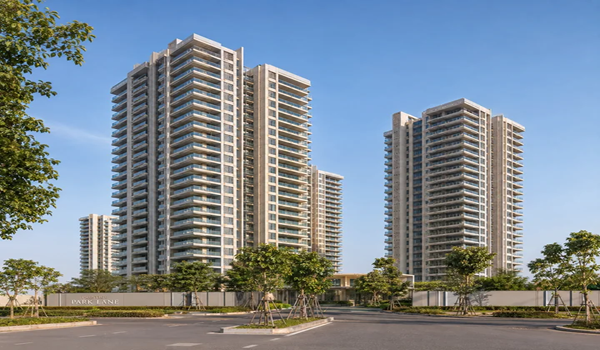
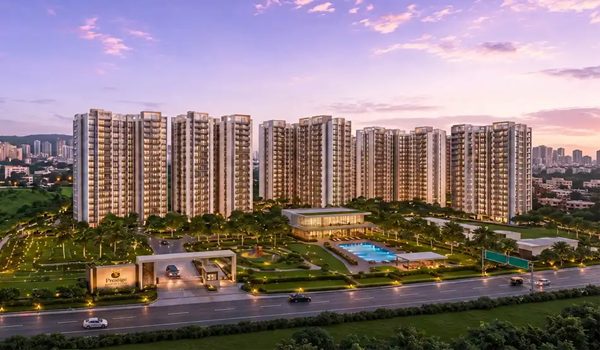
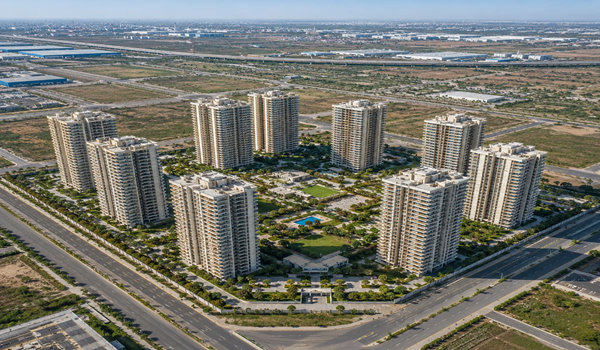
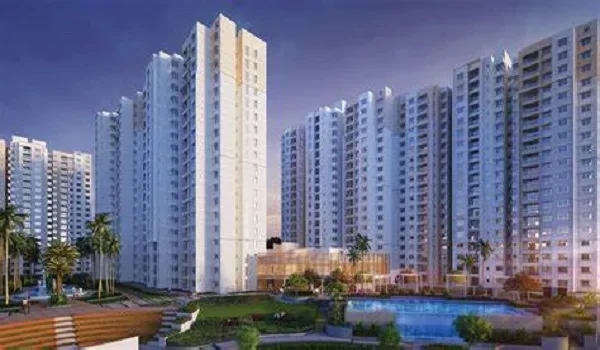
Prestige Parklane moved out of that category on 15 September 2026, when it registered under PRM/KA/RERA/1251/309/PR/150926/008941. The filing declares 1,788 homes across 9 towers, a sanctioned FAR of 1.74, and a completion date of 31 December 2030. Those are now checkable rather than promised.
Check the payment structure, not just the price
Not every staged plan is construction-linked, and the difference decides what happens if the site slows. A construction-linked plan ties instalments to certified progress. A date-linked plan runs on fixed calendar dates regardless. Prestige Parklane publishes a date-linked schedule: 10 per cent on booking, 10 per cent on agreement, then 24 instalments of 3.2 per cent from December 2026 to October 2030. Neither structure is wrong. But know which one you are signing.
Who should choose which
Under construction if you have somewhere to live, a horizon of five years or more, and want the lowest entry with choice of unit. Also if you are buying with a rising income and the staged payment suits.
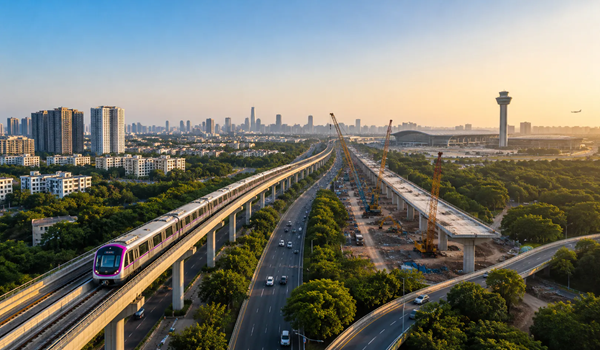
Ready to move if you need to move within a year, or if paying rent and an EMI together would strain the household. Also if you want to inspect what you are buying, or if a delay would be genuinely disruptive rather than merely annoying. On the Devanahalli corridor specifically, ready to move stock is thin because most of it is still building.
Frequently asked questions
No. Once the occupancy certificate is issued, a completed flat attracts no GST. Under construction attracts 5 per cent with no input tax credit.
Under construction is cheaper and offers choice of unit, at the cost of delay risk and rent overlap. Ready to move costs more but removes both risks. Your timeline usually decides it.
At minimum, enough to cover the 5 per cent GST plus the rent you will pay while waiting. Below that gap, the ready flat is the better deal.
Considerably safer in a RERA-registered project, where areas and dates are filed and 70 per cent of receipts sit in a separate account. The risk sits with unregistered pre-launch sales.
Under RERA you may withdraw with a full refund plus interest and compensation, or stay and claim interest for every month of delay until handover.
At about ₹30 per square foot per floor above the fifth, the spread across a 24 storey tower runs to several lakhs on a larger apartment. It is a real line, not a rounding error.