Devanahalli in 2035: what the committed spending actually points to
Most of this site describes the Devanahalli corridor as it is today. This piece is about where the committed spending points. It sets out what is genuinely likely by 2035, and what would have to go wrong for it not to happen. It is a projection, and it is labelled as one.
What is already committed
Start with money that is contracted rather than announced. That is what makes a forecast worth reading.
| Commitment | Value | Lands by |
|---|---|---|
| Airport Terminal 2 expansion | ₹19,800 crore | 2028 |
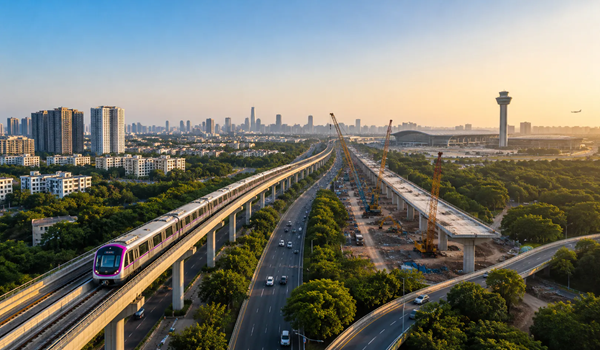
| Metro Blue Line, Phase 2B | ₹10,584 crore | Sept 2027 airport section; Mar 2028 full line |
| Airport operator capital expenditure to 2029 | About ₹17,000 crore | 2029 |
| Foxconn Devanahalli | About ₹20,000 crore | Building, hiring |
| AxisCades aerospace hub | ₹6,000 crore | Phased from 2026 |
| Bengaluru Airport City | 460 acres, 45 m sq ft by 2040 | Phased |
| Devanahalli ITIR | About ₹1.06 lakh crore estimated | Long horizon |
What that plausibly produces by 2035
An airport city rather than an airport
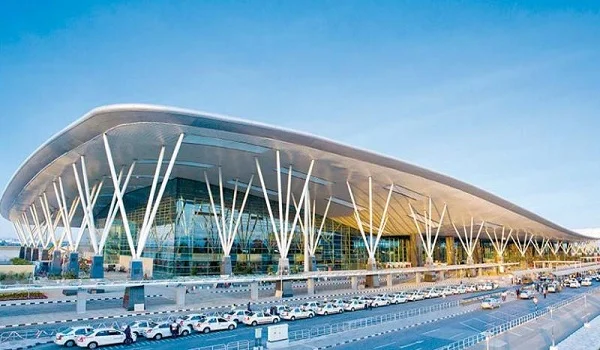
Terminal capacity beyond 85 million passengers. A 460 acre business district with tens of millions of square feet of offices, hotels and an arena. Airports at that scale stop being infrastructure a city uses. They become districts a city lives around. Amsterdam and Dubai are the reference points, at different scales.
Employment that is not software
Aerospace and defence at the KIADB park, electronics assembly at Foxconn, data centres, logistics, aviation services, and global capability centres in Airport City. That mix is unusual for Bengaluru. It is the corridor's structural advantage, because it is less exposed to a single sector's cycle than Whitefield or Sarjapur Road.
The metro changes the map
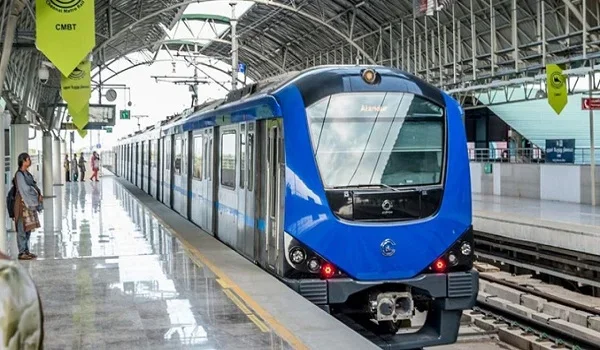
When the Blue Line commissions, Devanahalli connects to KR Puram and through it to the eastern corridors. That does not make a Whitefield commute pleasant. It converts an impossible journey into a long one, which widens the buyer pool considerably.
Retail and social infrastructure catch up
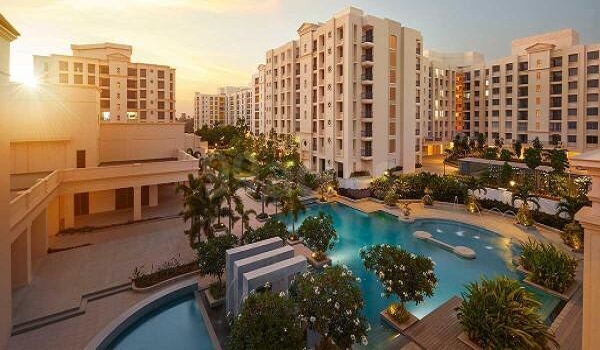
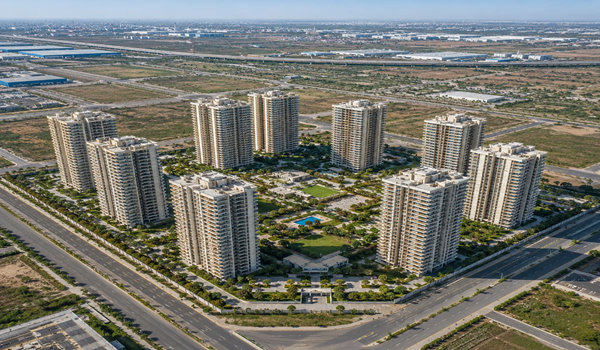
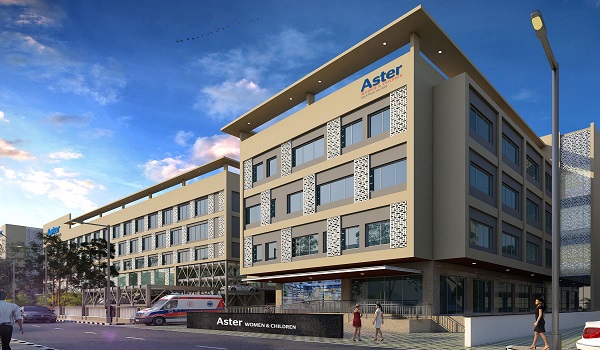
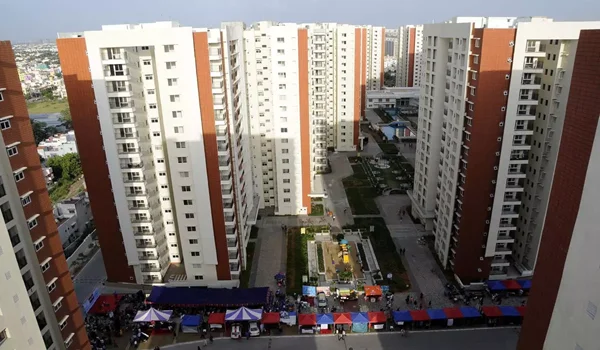
Today this is the corridor's weakest point. It is a function of household count rather than of intent. Retail follows people. With several large townships completing between 2028 and 2030, the household base that supports a mall and a hospital arrives in that window rather than now.
What the price probably does
Devanahalli averaged about ₹9,250 per square foot in August 2026, up roughly 72.7 per cent over five years. Extrapolating that rate forward would be lazy, because two forces act on it in opposite directions.
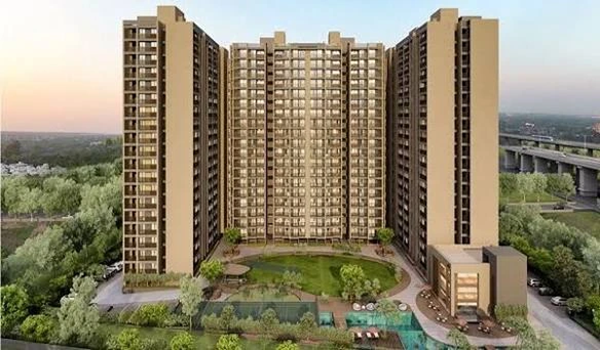
- Downward, near term: North Bengaluru held about 28 per cent of the city's unsold inventory in the second quarter of 2026. City-wide stock rose 34 per cent year on year while sales fell. Several very large projects complete within two years of each other.
- Upward, from about 2028: the metro commissions, Terminal 2 completes, Airport City fills, and the supply overhang clears.
The honest shape is therefore flat to soft in real terms for two or three years, then a repricing concentrated around commissioning. Corridors reprice when infrastructure opens, not when it is announced. The movement tends to compress into the twelve months either side of opening.
What changed in September 2026
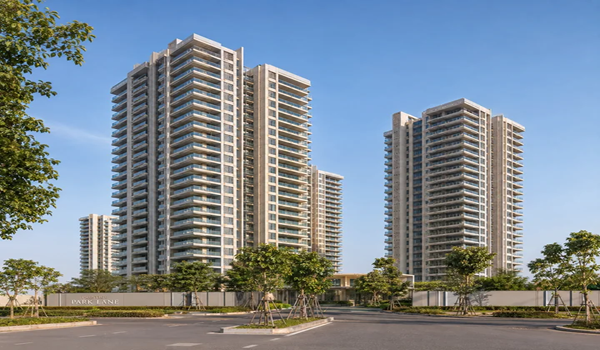
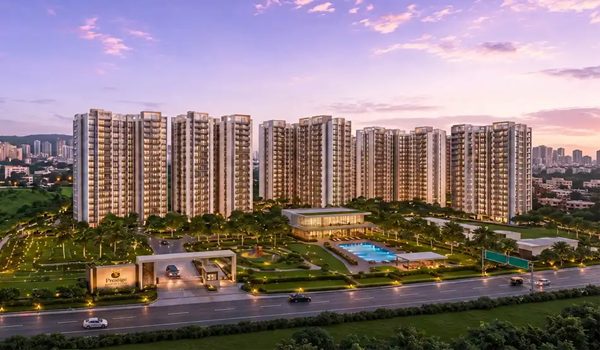
One structural thing shifted this month, and it affects how a buyer can test any of the above. Projects that were previously pre-launch have begun reaching the RERA register. Prestige Parklane registered on 15 September 2026 under PRM/KA/RERA/1251/309/PR/150926/008941.
Registration converts marketing claims into filed figures. Carpet areas, unit counts, the approving authority and a completion date all become checkable on a public record. For a 2035 forecast this matters in a specific way. Declared completion dates across the corridor now cluster between 2029 and 2030, which is when the household base arrives and retail becomes viable.
What would have to go wrong
A forecast worth anything names its failure modes.
- The metro slips again. It has moved three times already. Another two year slip pushes the repricing out with it.
- Water. Devanahalli sits outside the Cauvery network. If household growth outruns water infrastructure, it constrains everything else. This is the most underrated risk on the corridor.
- Supply overshoot. If developers keep launching into a market already carrying 28 per cent of the city's unsold stock, the clearing period lengthens.
- Employment concentration. Foxconn is a large share of the corridor's headcount growth. A shift in global electronics assembly would matter here.
- Land acquisition politics. The 1,777 acre withdrawal in July 2025 showed that expansion here is not automatic.
Checkpoints to watch
Rather than revisiting the whole thesis annually, watch four things.
- Does the Hebbal to airport metro section open near September 2027?
- Does city-wide unsold inventory fall below roughly twelve months?
- Does a full-service hospital commit to the corridor?
- Does piped water provision expand ahead of the 2029 to 2030 handovers?
If three of those four land, the repricing case holds. If two or fewer land, the horizon extends rather than the thesis breaking.
Who this corridor is for
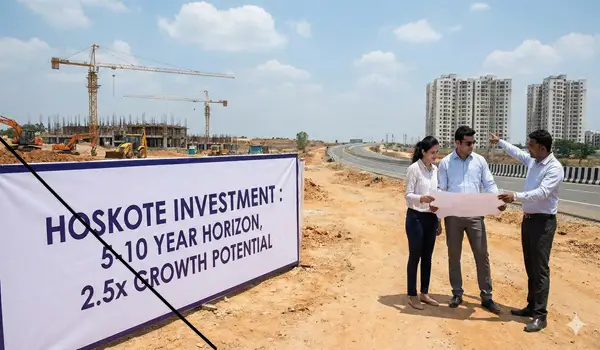
On a 2035 view, Devanahalli suits someone who works on it or flies often, who can hold seven to ten years, and who can tolerate thin retail in the interim. It suits a three year trade badly. It suits a daily eastern corridor commuter badly. Both remain true no matter how much is spent here.
Frequently asked questions
It carries the heaviest committed infrastructure spend of any Bengaluru corridor and a non-IT employment base. It also carries the city's largest unsold inventory share. A seven to ten year horizon is the honest requirement.
On committed spending, an airport district rather than an airport. Expect expanded terminal capacity, a 460 acre business city, a commissioned metro line and a household base large enough to support real retail.
The plausible shape is flat to soft in real terms for two to three years while supply clears, then a repricing concentrated around infrastructure commissioning from about 2028.
Water. The corridor sits outside the Cauvery network, and household growth outrunning water infrastructure would constrain everything else.
About 72.7 per cent over five years to August 2026, reaching roughly ₹9,250 per square foot. Past movement is not a forecast.
Pricing power currently sits with buyers because of the inventory overhang. That advantage narrows as supply clears toward 2028.