Devanahalli vs Whitefield vs Sarjapur Road: three corridors at three stages
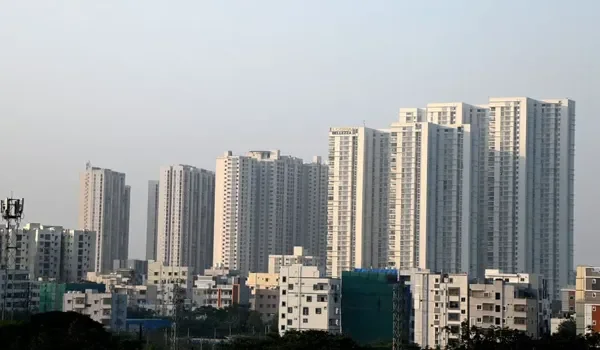
Over three decades, Bengaluru has spread along four main growth axes. Whitefield took off in the late 1990s. Sarjapur Road followed in the 2010s. Electronic City grew to the south. Devanahalli started moving once the airport opened in 2008.
All four have followed a similar path. The useful question is how far along that path each one has travelled today.
Prices side by side
| Corridor | ₹ per sq ft, 2026 | Main employers | Stage |
|---|---|---|---|
| Sarjapur Road | 11,560 | IT services, startups | Mature, congested |
| Whitefield | 10,850 | IT services, GCCs | Mature, fully built |
| Thanisandra Main Road | 10,300 | Manyata IT park spillover | Maturing |
| Bengaluru average | 9,450 | — | — |
| Devanahalli | 9,250 | Aviation, aerospace, defence, electronics, data centres | Early growth |
| Electronic City | 7,450 | IT services, manufacturing | Mature, value end |
Data: ANAROCK's Bengaluru residential report for Q2 2026, and SquareYards listings for August 2026.
The four-phase life of a corridor
Each Bengaluru growth belt so far has moved through four recognisable phases.
Phase one: the anchor lands. A large, permanent employer or facility opens. Land is inexpensive and almost nobody lives there yet.
Phase two: developers pile in. Builders spot the same chance within a year or so of each other. New flats outnumber buyers, real prices go flat, and purchasers hold the upper hand. Whitefield hit this point near 2001. Sarjapur reached it near 2013.
Phase three: the services open. Highways, metro stations, schools and hospitals arrive. Spare stock sells down and values climb quickly for a couple of years.
Phase four: it settles. Growth cools to roughly inflation plus a small margin, and traffic becomes the defining complaint. Today Whitefield and Sarjapur sit squarely in phase four. Devanahalli is finishing phase two and edging into phase three.
Two things set Devanahalli apart
They point in opposite directions, so it helps to hold both.
A different kind of employer
Three of the corridors above depend on one industry. When IT slows, Whitefield, Sarjapur and Electronic City all feel it together. Devanahalli's workforce is spread across aircraft engineering, defence production, phone and laptop assembly, freight and data centres.
Boeing holds a 43 acre site. Foxconn employs about 30,000 people on roughly 300 acres. NTT runs a 100 MW data campus. That breadth offers real protection when one sector turns down.
Employers that cannot relocate
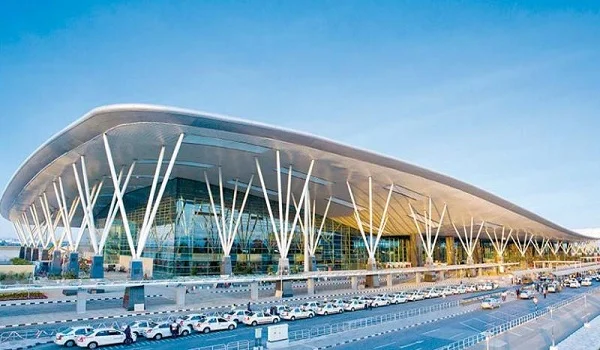
A technology firm can shrink its office in a quarter. An international airport with parallel runways, a ₹19,800 crore terminal expansion and a 460 acre business district is not going anywhere. The same goes for a data centre with its own substation, or Boeing's ₹1,600 crore engineering campus.
The downside: more competing supply
Devanahalli is carrying more new supply at this stage than the eastern corridors did at the same point. In Q2 2026, North Bengaluru accounted for roughly 28 per cent of the city's unsold homes. Birla, Godrej, Tata, Brigade, Embassy, Sumadhura, Total Environment, Assetz and Prestige are all marketing projects within a short drive of one another.
What a flat actually costs on each corridor
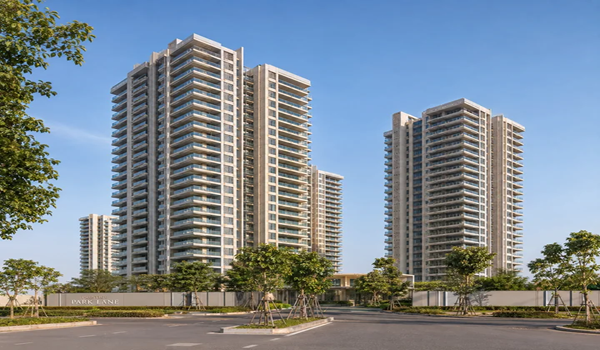
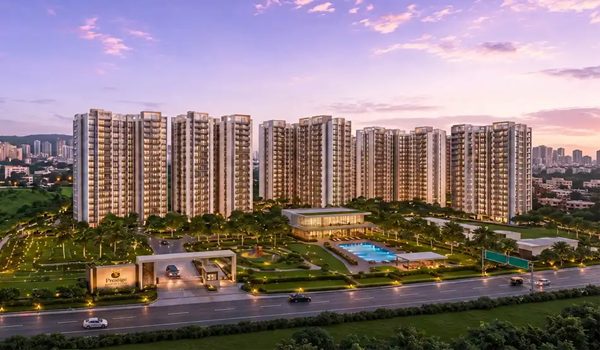
Rate per square foot hides the more practical number, which is the cheque you write. At Prestige Parklane in Devanahalli, a one bedroom of 567 to 571 sq ft starts at ₹65 lakhs, and a two bedroom of 828 to 880 sq ft starts at ₹90 lakhs. Buy the same floor area on Sarjapur Road at its ₹11,560 average and the two bedroom comes to about ₹25 lakhs more. That difference is not a bargain in disguise. It is the price the market puts on waiting for the corridor to mature.
Where you work decides most of this
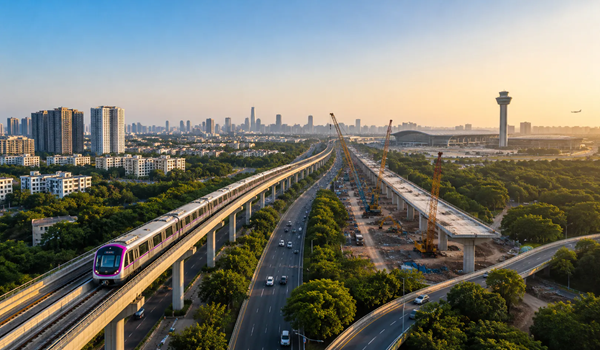
The IT jobs still sit in Whitefield and along Sarjapur Road. If your office is in either place, living in Devanahalli is impractical at any price. That holds until the airport metro reaches KR Puram, and probably afterwards too. Devanahalli makes sense if you work on the airport corridor, at Manyata or Hebbal, or if you catch flights often enough that a short trip to the terminal saves you time every week. Seen that way, Devanahalli is not a discounted Whitefield. It serves a different kind of working life altogether.
A quick way to choose
Choose Whitefield or Sarjapur Road if you work in eastern IT, want every facility in place now, and accept that growth from here will be moderate.
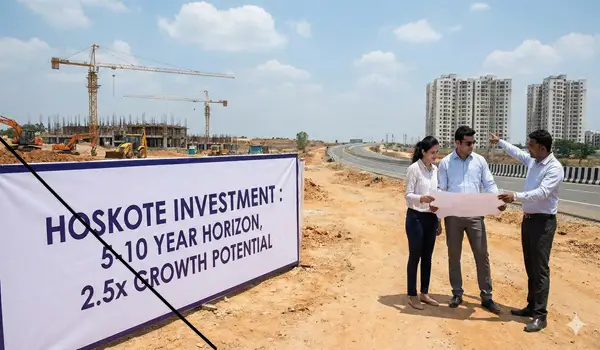
Choose Devanahalli if your job is on the corridor or you travel by air frequently, you can hold for seven to ten years, and you can put up with limited shopping and heavy new supply for a while.
Choose Electronic City if keeping costs down is the priority and your work is in the south. None of them rewards a two year hold. Prices on a corridor jump when infrastructure opens, and no buyer can hurry that.
Frequently asked questions
Neither is better in the abstract. Whitefield is built out and tied to IT. Devanahalli is younger, cheaper and more varied in its employers. Your workplace usually decides it.
Devanahalli averages about ₹9,250 a square foot against roughly ₹11,560 on Sarjapur Road, a gap of about a fifth before you account for flat size.
Not today. The metro link at KR Puram will shorten the trip, but it will still be a long daily journey.
Devanahalli has the largest committed infrastructure budget and sits earliest in its cycle. It also has the heaviest unsold supply, which is the main argument against it.
Its schools, shops and metro links are still arriving. The discount reflects the years a buyer must wait for them.
It is cheaper at about ₹7,450 a square foot, but it is a mature IT belt with limited growth left. It fits a budget-minded buyer who works in the south.