Owning a flat on KIADB land: lease-cum-sale, title and bank loans

Anyone considering a home inside an industrial park ends up asking the same question. They usually ask it late, and often of someone who cannot answer it properly. This guide explains how KIADB land ownership works, what the law allows, and the four questions that clear up the doubt.
The quick answer
Land allotted by the Karnataka Industrial Areas Development Board is not sold outright at first. It is given on a lease-cum-sale basis. Full ownership through an absolute sale deed comes only after the allottee meets the conditions, usually full payment plus running the approved activity for a set time.
Separately, Karnataka does not allow industrial land to be switched to non-industrial use. So homes inside an industrial area are lawful only where that land was earmarked for housing from the start. They are not lawful where an allottee simply decided to build flats on a factory plot. Everything turns on that difference, and you can check it before paying anything.
What does KIADB do?
KIADB is the state body that buys land for industry and hands it out to companies. It also acts as the planning authority for building inside the industrial areas it notifies. For a home buyer, that second role matters, because KIADB approves the building plan.
How lease-cum-sale works
KIADB acquires land and allots it to industrial users under a lease-cum-sale deed. The allottee moves in and pays, but KIADB stays the lessor until every condition is met. Only then is an absolute sale deed signed, making ownership unconditional.
| Stage | Who holds title | What the holder can do |
|---|---|---|
| Lease-cum-sale deed | KIADB remains lessor | Use the land for the allotted purpose. Transfer and subletting need written KIADB consent. |
| Absolute sale deed | The allottee | Full ownership, subject to land use restrictions that run with the land |
Two practical effects follow from this. During the lease-cum-sale period, transferring the land usually needs KIADB's written no-objection. A transfer made without it can put the whole allotment at risk. Signing the sale deed also does not remove the land-use restriction. Karnataka's stance is that the ban on changing land use covers past allotments too, whether or not a sale deed exists.
Why homes can be legal in an industrial area
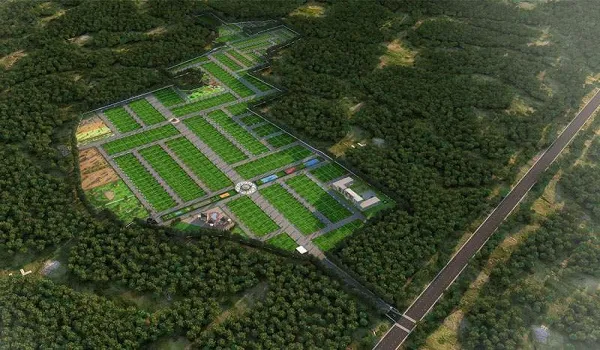
The state intentionally set aside space for housing, on land zoned for it from the outset rather than converted later. Karnataka follows a "walk to work" policy. It plans housing inside industrial areas on a reserved share of land, together with schools, shops and clinics. The aim is for factory staff to live nearby instead of crossing the city every day. Reports suggest the reserved share is about 10 to 15 per cent of an industrial area.
That is the legitimate path. Land zoned for housing in the area's own plan is entirely different from a factory plot whose owner later applied to change its use. The first is what the policy intends. The second is something the government has warned buyers about more than once. The state has gone so far as to publicly warn people not to buy plots meant for industry, saying conversion would not be allowed.
Four questions to ask
You do not need a lawyer to ask these, but use one to interpret the answers.
| Question | What a good answer looks like |
|---|---|
| Is the residential parcel designated for residential use in the area plan? | Yes, with the plan or allotment document showing it. Not: it is being regularised. |
| What instrument will convey my apartment? | A sale deed for the undivided share of land plus the constructed apartment, with the parent title traceable to an absolute sale deed or a residential allotment. |
| Is there an absolute sale deed on the parent land, or is it still lease-cum-sale? | Either can work, but you need to know which. If lease-cum-sale, ask what conditions remain and who carries the risk. |
| Will a bank lend on it? | The practical test. If mainstream lenders have approved the project, their legal teams have already run this check. |
Buyers tend to overlook the bank question. A lender holds the flat as security and must be able to act on it. If ownership is conditional, restricted or unclear, banks either refuse or lend with conditions. Approval by several major banks does not prove clean title. But if no bank has approved a project, that is a meaningful warning.
How this applies to Prestige Parklane
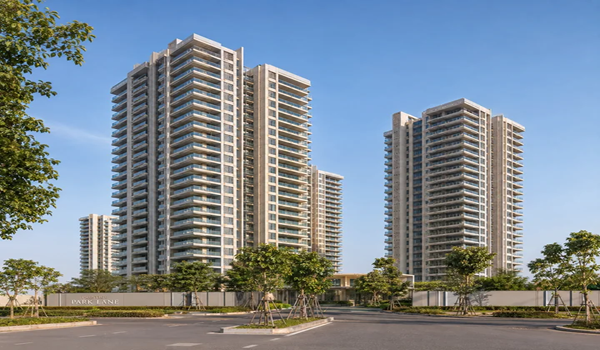
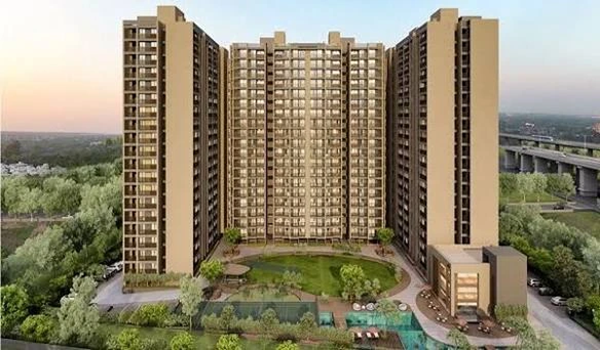
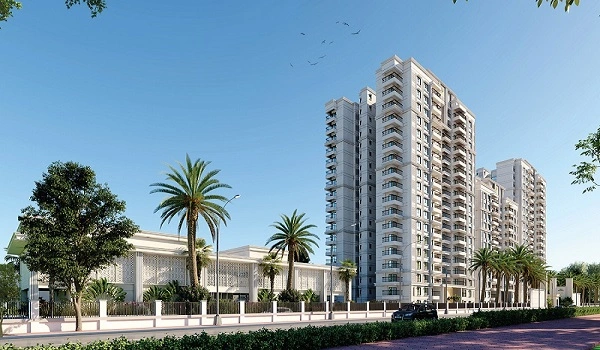
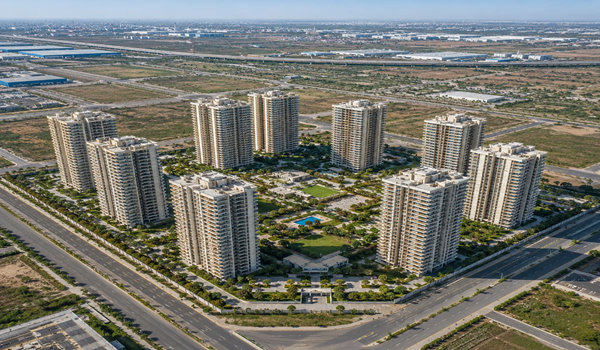
Prestige Parklane is in Phase 2 of the KIADB aerospace park at Devanahalli. Its master plan covers 32.26 acres, with 11.91 acres for housing. The rest holds a business estate of three data centres, a warehouse and a manufacturing block. This website does not give a legal title opinion, because it is not qualified to. No channel partner is.
What it can do is point to the official record. Karnataka RERA registered the project on 15 September 2026, under PRM/KA/RERA/1251/309/PR/150926/008941. When a project registers, the promoter files title papers and an encumbrance certificate with the regulator. Those become public documents you can read yourself. Several details on that record can now be checked directly.
- The promoter is Apex Realty Management Private Limited, CIN U45200KA2018PTC119740.
- KIADB is recorded as the approving authority, confirming how the project was sanctioned.
- The approved FAR is 1.74, covering 9 towers and 1,788 homes.
- The completion date on record is 31 December 2030.
Those facts are what count. Not a salesperson's reassurance, and not a paragraph on a website, but the official filing. One more item concerns title directly. The filing asks whether any dispute affects the land, property or khata, and the promoter has answered no under a sworn affidavit. That is a statement made on oath, not an independent search, so a lawyer should still check. But on KIADB land, where tenure is the main concern, it is the first document to read.
How KIADB land affects your home loan
Banks treat industrial-area land as a separate category. Expect more questions than for a normal BDA or BBMP project. A bank's legal review usually looks at four points.
- Whether the parent land is still under lease-cum-sale or has moved to an absolute sale deed.
- Whether housing is zoned in the area plan, not applied for later.
- Whether KIADB approved any transfer during the lease period.
- Whether the sanctioned plan and RERA filing name the same approving authority.
Ask the developer which lenders have already approved the project. A list of approving banks means several legal teams have independently checked it. If you hear that approvals have been "in process" for a long time, take that as useful information rather than a simple delay.
Documents to collect before paying
Gather these, and keep copies.
- The RERA registration certificate and its filed attachments.
- The allotment letter or sale deed for the parent land.
- A thirty-year encumbrance certificate for the survey numbers.
- The sanctioned plan showing the housing area.
- Written confirmation of the approving authority.
A property lawyer can review all five in one afternoon. It is the cheapest part of the whole purchase.
Industry nearby: benefit and risk
Both sides deserve attention. This address exists because employers share the land. Boeing, Airbus, Safran, Collins Aerospace, Dynamatic, Foxconn and Wistron are inside the park or right beside it. Housing within walking distance of those jobs is exactly what the policy set out to create. It also explains why the project leans towards smaller homes.
The industrial setting is equally why buyers must check more carefully than in an ordinary suburb. Both points hold together, and a site that mentions only the first is selling rather than informing.
Frequently asked questions
Not when first allotted. KIADB gives land under a lease-cum-sale deed, and full ownership comes only after conditions are met, usually full payment and running the approved activity for a set period. Land-use restrictions remain even after the sale deed is signed.
Yes, on land zoned for housing in the industrial area's plan. Karnataka's walk-to-work policy reserves part of such areas for homes. Converting an industrial plot to housing afterwards is not allowed.
Yes, when housing is properly zoned and title is clear, and major lenders regularly approve such projects. Irregular land use or conditional title can lead to refusals or conditions.
Read the RERA filing, which includes title papers and an encumbrance certificate. Get your own encumbrance certificate for the survey numbers. Then ask for the parent land's allotment or sale deed, and have a lawyer confirm the housing use was zoned, not converted.
BDA land is allotted for housing by the Bangalore Development Authority. KIADB land is acquired for industry, with housing allowed only on the portion reserved in the industrial area plan.
Yes, once you hold a registered sale deed for your flat. A buyer's lawyer will check the same tenure points, so keep your RERA filing, sale deed and encumbrance certificate ready.
Its RERA registration, PRM/KA/RERA/1251/309/PR/150926/008941, puts the filed documents on public record for inspection. This site gives no title opinion. Read the filing and have a lawyer review it before paying.