Capital gains tax when you sell property in India

Selling property in India produces a tax bill that surprises people. The exemptions that reduce it are conditional in ways that are easy to fail by accident. This guide covers how capital gains tax on property is calculated, the current rates, what you can add to your cost base, and the legal ways to reduce the bill.
General information, not tax advice. The rules changed in recent Finance Acts and continue to be refined. Confirm the current position with a chartered accountant before you transact.
What is capital gains tax on property?
Capital gains tax is charged on the profit you make when you sell a capital asset. For immovable property, the gain is the sale price minus your cost of acquisition, improvement and transfer. It is not charged on the sale price. It is charged only on the gain, which is why documenting your costs properly matters so much.
Short term or long term
The dividing line for immovable property is 24 months.
- Held 24 months or less: short term capital gain. It is added to your income and taxed at your slab rate. For most buyers of a ₹1 crore property that means 30 per cent plus surcharge and cess.
- Held more than 24 months: long term capital gain, taxed at a concessional rate.
For an under construction purchase, the holding period generally runs from the date of allotment rather than from possession. That usually works in a buyer's favour. The treatment has been litigated and is fact specific. Take advice on your own dates.
The long term rate, and the indexation question
Long term gains on property were historically taxed at 20 per cent with indexation. Indexation adjusts your purchase cost upward for inflation using the Cost Inflation Index. Recent Finance Act changes introduced a lower headline rate of 12.5 per cent without indexation. An option remains to compute under the older 20 per cent with indexation basis for properties acquired before a specified date, whichever produces the lower tax.
Which is better depends on how long you held and how much inflation ran in that period. A long hold in a high inflation period usually favours indexation. A shorter long-term hold in a low inflation period usually favours the flat rate.
How capital gains tax is calculated: a worked example
Take a flat bought for ₹65 lakhs and sold seven years later for ₹1.1 crore.
| Line | Amount |
|---|---|
| Sale consideration | ₹1,10,00,000 |
| Less: purchase price | ₹65,00,000 |
| Less: stamp duty and registration paid | ₹4,87,500 |
| Less: brokerage on purchase and sale | ₹2,00,000 |
| Less: capital improvements with invoices | ₹3,00,000 |
| Long term capital gain | ₹35,12,500 |
| Tax at 12.5 per cent without indexation | About ₹4,39,000 plus cess |
Run the indexed 20 per cent computation alongside it where the property qualifies. Take whichever is lower. Note what the deductions did. Adding ₹9.87 lakhs of legitimate costs removed roughly ₹1.23 lakhs of tax.
What you can add to your cost
Gain is sale consideration minus cost of acquisition, improvement and transfer expenses. People routinely understate the cost side and overpay. Deductible against the gain:
- The purchase price.
- Stamp duty and registration paid on purchase.
- Brokerage paid on purchase and on sale.
- Legal fees on both transactions.
- Capital improvements: a modular kitchen, additional rooms, structural work. Not repainting or routine repairs.
- Interest on the home loan in certain circumstances, if not already claimed elsewhere. This is contested territory, so take advice.
Keep the receipts. Ten years later, the invoice for the kitchen is the difference between a deduction and an argument.
How to save capital gains tax on a property sale
Section 54: buy another home
Long term gain on a residential property is exempt to the extent it is reinvested in another residential property in India. The purchase must fall within one year before or two years after the sale. Construction must complete within three years. If you cannot complete the reinvestment before your tax return is due, park the money in a Capital Gains Account Scheme account with a bank before the filing deadline. Money left in an ordinary account does not qualify. This is the single most common way the exemption is lost.
Section 54EC: bonds
Invest the gain in specified bonds, such as NHAI or REC, within six months of the sale. There is a ceiling on the amount and a lock-in period. The return is modest, so this suits someone who wants the exemption without buying another property.
Time the sale past 24 months
The simplest lever of all. Selling at month 23 taxes the whole gain at your slab rate. Selling at month 25 moves it to the concessional long term rate.
If the seller is an NRI
Different, and heavier. TDS on a purchase from a non-resident is deducted at 20 per cent plus surcharge and cess on the whole consideration, not on the gain. It also requires the buyer to hold a TAN. A seller expecting a smaller deduction can apply to the assessing officer for a lower deduction certificate. If you are buying a resale unit from an NRI, get advice before you pay anything. The obligation to deduct correctly sits with you as the buyer.
The buyer's TDS obligation
On a purchase from a resident where consideration exceeds ₹50 lakhs, the buyer deducts 1 per cent and deposits it. This is your obligation, not the seller's. Failing it creates a problem for you rather than for them.
What this means on a Devanahalli horizon
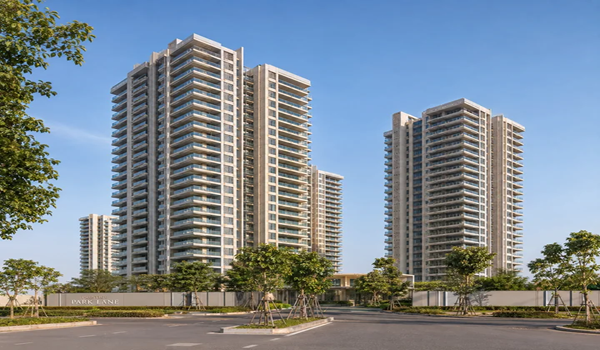
This corridor rewards a long hold. Infrastructure here commissions between 2027 and 2030, and corridors reprice around commissioning rather than announcement. Prestige Parklane carries a RERA-declared completion date of 31 December 2030. A buyer taking allotment now and holding past completion is comfortably outside the 24 month short term window.
A sale inside 24 months is taxed at slab rates and lands before the repricing. A hold past that point is both taxed more kindly and more likely to have captured the movement. That is not tax advice either. But the tax structure and the corridor's timeline happen to point the same way.
Frequently asked questions
Take the sale consideration, subtract the purchase price, stamp duty, brokerage, legal fees and documented capital improvements. The remainder is your gain, taxed at the short term or long term rate.
Short term gains are taxed at your income slab rate. Long term gains are taxed at 12.5 per cent without indexation, with an option in some cases to use 20 per cent with indexation.
Reinvest the gain in another residential property under Section 54, or in specified bonds under Section 54EC within six months. Both carry strict conditions and deadlines.
A gain on immovable property held for more than 24 months. It is taxed at a concessional rate rather than at your slab rate.
For an under construction purchase it generally runs from the date of allotment. The position is fact specific and has been litigated, so confirm against your own documents.
The exemption is lost for the unreinvested amount, and it becomes taxable in that year. Deposit before the return filing deadline even if you have not yet identified a property.