Is your money safe before RERA registration?
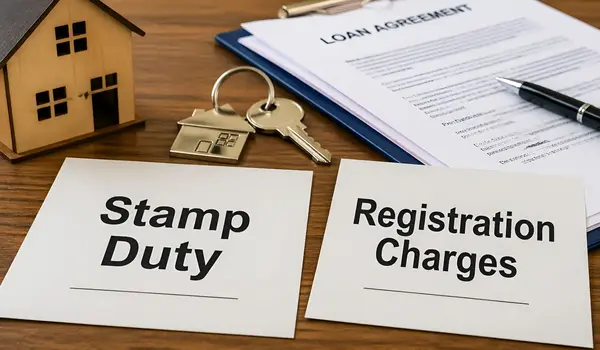
A buyer asked recently what happens to their money if they pay a booking amount and the project never launches. It is a fair question. The answer is less comforting than most sales conversations suggest, and it hinges on one event: RERA registration.
The short answer
Before a project carries a RERA registration number, there is no agreement for sale, no escrow account, and nothing the Act can enforce on your behalf. Any money you hand over in that window is protected by the developer's goodwill and by ordinary contract law, not by RERA.
After registration, 70 per cent of what you pay goes into a dedicated account. It can only be withdrawn against construction progress certified by an engineer, an architect and a chartered accountant. That difference is the single most important thing to understand about buying early. It is why the sequence of what you sign matters more than the discount you are offered.
The three stages, and what protects you in each
| Stage | What you typically pay | What protects it |
|---|---|---|
| Expression of interest | Nothing | Nothing needs to. No money has moved. |
| Pre-launch booking, before registration | A booking or token amount | Your receipt and whatever the letter says. Not RERA. |
| After RERA registration | Booking plus the published schedule | Registered agreement for sale, 70 per cent escrow, declared completion date, delay compensation |
Section 3 of the Act is blunt about it. A project cannot be advertised, marketed, booked or sold until it is registered. So a booking taken before registration is not a booking in the eyes of the Act. It is a private arrangement that both sides are calling a booking.
What the escrow actually does
Once a project is registered, Section 4(2)(l)(D) requires the promoter to put 70 per cent of money collected from allottees into a separate bank account for that project. It cannot be spent on another site, on land for the next launch, or on running the company.
Withdrawals must be in proportion to the stage of completion, and certified by three people: an engineer, an architect and a chartered accountant. The account is audited annually. It is not a perfect shield. Money does still get diverted, and enforcement depends on the state authority. But it is a genuine structural protection, and it does not exist one day before registration.
Getting your money back
Two different situations, and people confuse them constantly.
You change your mind. This is cancellation, and what you get back depends on what you signed. Most agreements allow the developer to forfeit a portion, often the booking amount. There is no statutory right to a full refund simply because you had second thoughts.
The developer fails to deliver. This is different and much stronger. Section 18 gives you a choice. Withdraw and take back the entire amount paid with interest, or stay and claim interest for every month of delay until possession.
That is a right under the Act, not a negotiation. But it only exists for a registered project with a declared completion date. The asymmetry is worth sitting with. Before registration you can lose your booking amount with limited recourse. After registration, a failure by the developer entitles you to the whole lot back with interest.
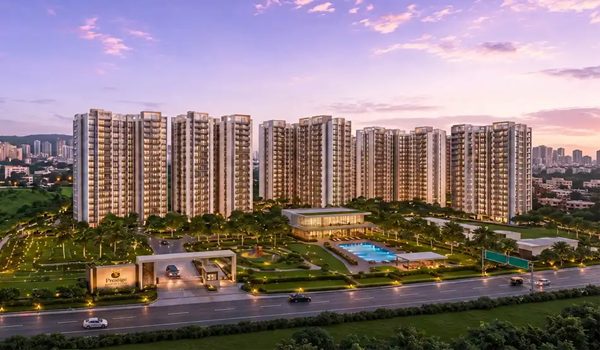
What changed for Prestige Parklane
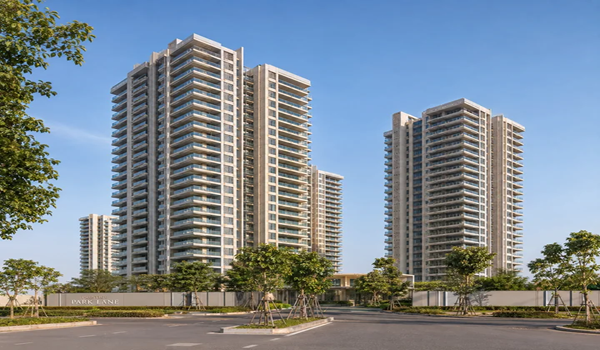
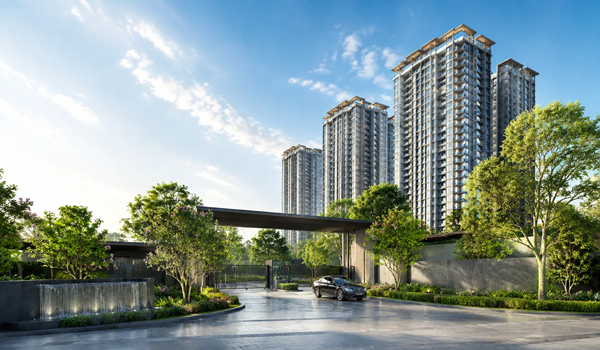
Everything above describes the general rule, and it still applies to any unregistered project you are shown. For Prestige Parklane specifically, the risky window has closed. The project registered with Karnataka RERA on 15 September 2026, under PRM/KA/RERA/1251/309/PR/150926/008941. That moves money paid now inside the statutory protections rather than outside them. Specifically:
- The 70 per cent escrow requirement applies to receipts from allottees.
- A completion date is filed: 31 December 2030, with a declared start of 1 October 2026.
- Section 18 withdrawal rights apply if that date is missed.
- A sanctioned plan is on record: DO3-KIADB-00128/26-27/BP, approved by KIADB on 13 August 2026.
- The promoter is named: Apex Realty Management Private Limited.
What registration does not change
Registration protects where your money sits. It does not change when you must pay it. The Parklane schedule is date-linked rather than construction-linked. It runs 10 per cent on booking, 10 per cent on agreement, then 24 instalments of 3.2 per cent every two months from 10 December 2026. The escrow ensures those payments are spent on this project. It does not pause them if the site slows down.
So what should you actually do
For any project, check the registration yourself. Use the Karnataka RERA portal and search by project name or number. Not a screenshot on WhatsApp.
Confirm the number is a project, not an agent. The sixth segment should read PR. An AG in that position is an agent registration, and quoting one as the project number is a common way material misleads.
Read the declared completion date and the filed documents. That is what you will hold the promoter to.
Then read the agreement before the cheque. Specifically the cancellation clause, the delay compensation rate, and whether that rate matches what they charge you for late payment. If the two rates differ, ask why. It tells you something.
Match the names. Check that whatever you sign names the same promoter and the same registration number as the filing.
Red flags on any unregistered project
If you are shown a project that has not yet registered, these signs should slow you down.
- A request for money of any kind: a token, a holding amount, or a cheque someone promises not to bank.
- A "registration applied for" line offered in place of an actual number you can search.
- An agent registration number quoted as though it were the project number.
- A price that expires this week on a project that cannot yet legally be sold.
- A receipt that says "booking" with no unit, tower or carpet area named on it.
- Payment to an individual or a channel partner account rather than to the promoter entity.
None of these proves bad intent. Each one moves risk from the seller to you. Two or more together is a reason to wait for registration before anything changes hands. An expression of interest avoids all of them. It costs nothing, commits nobody, and still gets you the price list and unit plans early.
The awkward bit about early-stage discounts
Pre-launch pricing is real. Entry is usually lower than at public release, and that discount is compensation for taking on the risk described above. It is not a favour. What deserves pushback is urgency on an unregistered project. If someone says a rate expires on Friday and the project has no registration number, what is expiring is a sales target, not a legal position.
A project that cannot legally be sold cannot legally have a deadline to buy it by. Waiting a few weeks for registration costs very little and removes most of the risk. For an ordinary buyer with one property to their name, that is usually the right trade.
Frequently asked questions
It is not protected by the RERA Act. Before registration there is no registered agreement for sale and no escrow account. You are relying on ordinary contract law and on the developer.
Once a project is registered, 70 per cent of money collected from buyers must sit in a separate project account. Withdrawals must match construction progress and be certified by an engineer, an architect and a chartered accountant.
Yes. It registered on 15 September 2026 under PRM/KA/RERA/1251/309/PR/150926/008941, so money paid now falls inside the statutory protections.
Usually not if you are simply changing your mind. Most agreements permit forfeiture of part of the amount, commonly the booking sum. Read the cancellation clause before signing.
For a registered project, Section 18 lets you withdraw and recover the entire amount with interest, or stay and claim interest for every month of delay until possession.
Search the project name or registration number on the Karnataka RERA portal. Confirm the sixth segment of the number reads PR, and that the promoter matches your agreement.
Not on a date-linked schedule. Registration protects where your money is held and gives you delay remedies, but instalments on fixed dates still fall due.