The Prestige Parklane build: from launch to handover
The survey form opens on 25 September 2026. What most buyers have not pictured is the four years that follow it. Not the handover, which everyone imagines, but the middle. What is actually happening on site, what you are paying at each point, and where delays come from when they come. This sequence draws on the RERA filing, the published payment schedule, and how a development of this shape normally gets built.
The dates that are now fixed
Registration turned the timeline from an estimate into a filed commitment.
| Milestone | Date | Source |
|---|---|---|
| Building plan sanctioned | 13 August 2026 | KIADB, DO3-KIADB-00128/26-27/BP |
| RERA registration granted | 15 September 2026 | PRM/KA/RERA/1251/309/PR/150926/008941 |
| Survey form opens | 25 September 2026, 5 PM | Launch schedule |
| Declared project start | 1 October 2026 | RERA filing |
| First instalment | 10 December 2026 | Payment schedule |
| Last of 24 instalments | 10 October 2030 | Payment schedule |
| Declared completion | 31 December 2030 | RERA filing |
That is a little over four years from declared start to declared completion.
Why this build is longer than most
Three things stretch the programme here. All of them are structural rather than bad luck.
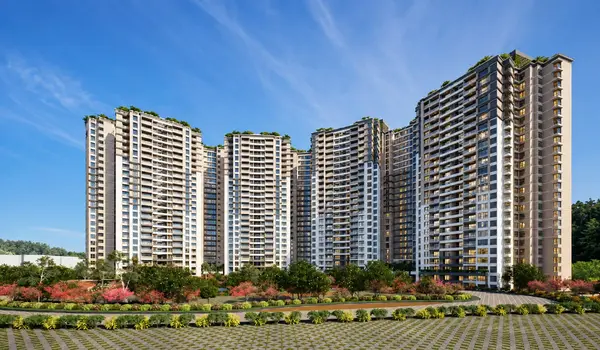
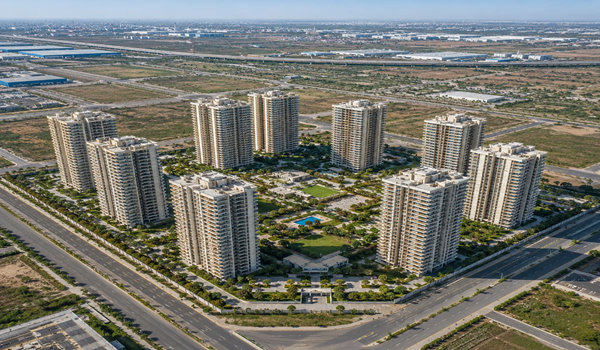
Nine towers, not one
They do not rise together. Contractors sequence towers so that formwork, cranes and labour move through them in waves. That is why two buyers in the same project can have possession dates many months apart. Ask where your tower sits in the sequence. It is a fair question, and the answer affects your money.
Three basement levels
Excavation, shoring, dewatering and three suspended slabs all happen before anything appears above ground. On a site this size that is a long and invisible phase. It can make the early months look quiet even when a great deal of work is under way.
G+24 at 76.55 metres
Twenty five structural floors per tower, to a filed height of 76.55 metres. Once a tower finds its rhythm, a slab cycle runs roughly seven to ten days. The structure alone is therefore the better part of a year per tower, before any finishes.
The stages, and how payment relates to them
Most schedules tie payment to construction. This one does not, and the difference matters more than almost anything else on this page. The schedule is date-linked. Ten per cent on booking, ten per cent at the agreement, then twenty four instalments of 3.2 per cent every second month from 10 December 2026 to 10 October 2030. A final 3.2 per cent falls due on intimation of possession.
That inverts the usual protection. In a construction-linked plan your money follows the building: no slab, no demand. Here, demands arrive on the calendar. If a tower runs a year late, the instalments keep falling due on the tenth of alternate months. What you have instead of a payment brake is the declared completion date of 31 December 2030, and the RERA delay remedies attached to it.
How much you will have paid, and when
| By this date | Cumulative share paid |
|---|---|
| Agreement signed | 20% |
| End of 2027, after 7 instalments | 42.4% |
| End of 2028, after 13 instalments | 61.6% |
| End of 2029, after 19 instalments | 80.8% |
| 10 October 2030, after 24 instalments | 96.8% |
| Intimation of possession | 100% |
By the end of 2028 you will have paid nearly two thirds of the price, regardless of how far the building has risen. Plan your cash flow and loan accordingly.
What the site should look like, year by year
Knowing what normal progress looks like helps you read a site visit or a quarterly update honestly.
| Period | What you would expect to see |
|---|---|
| Late 2026 to 2027 | Mobilisation, excavation, shoring and the three basement levels. Little visible above ground. |
| 2027 to 2028 | Towers emerging from podium level. Slab cycles settling into rhythm on the first towers. |
| 2028 to 2029 | Structure reaching height on early towers. Later towers following in waves. Block work beginning. |
| 2029 to 2030 | Finishes, services, lifts and façade. Landscaping and the clubhouse taking shape. |
| Late 2030 | Fire clearance, occupancy certificate application, snagging and handover. |
This is how a build of this shape usually unfolds, not a schedule the developer has published. Use it as a sense check against the quarterly updates. If certified progress lags this pattern by a year or more while your payments stay on the calendar, that gap is worth raising early.
Where delay actually comes from
Not usually from a developer running out of will. From four specific places, and knowing them helps you read a site update properly.
Mobilisation. Between registration and the first heavy works there is a mobilisation window. With the plan sanctioned and registration granted, the regulatory side of that is now settled.
Water. Construction of this scale needs a great deal of it. The RERA filing records the project's source of water as borewell, and Devanahalli sits outside the Cauvery network, so supply affects builders before it affects residents.
Labour, seasonally. Bengaluru sites lose pace around the monsoon, and again at harvest and festival periods when migrant labour travels home. A slab cycle that runs nine days in February can run fifteen in October.
The tail. Finishes, lifts, firefighting clearance, and then the occupancy certificate. The OC is a separate approval that nobody can hurry. Do not take possession without it.
What RERA registration gives you during the build
Registration converts a marketing timeline into a declared one. The completion date now carries consequences.
- Delay remedies. Beyond 31 December 2030, allottees are entitled to interest, or to withdraw, on the terms the Act sets.
- Quarterly progress on public record. The promoter must upload updates within 15 days of each quarter ending, so you stop depending on a sales team.
- Escrow. Seventy per cent of collections sit in a separate account, drawn against certified progress.
Those quarterly updates are the most useful tool you have on a date-linked schedule. They let you compare certified progress against what you have already paid.
What to do during the build
- Visit at slab stage, not at the end. Once plastering is done, deviations are buried. At structure stage you can see column positions, duct sizes and whether your balcony matches the plan.
- Keep every demand letter and receipt in one place. You will need the chain at registration, at loan closure, and if you ever transfer.
- Read the quarterly RERA updates. They are more reliable than any newsletter.
- Budget the interest. Pre-EMI runs for the whole build and buys no equity.
- Hold a cash buffer. On a date-linked schedule, a bank may disburse against construction while the developer demands on the calendar.
- Do the snag list properly. The window between the possession notice and taking keys is your leverage, and it does not come back.
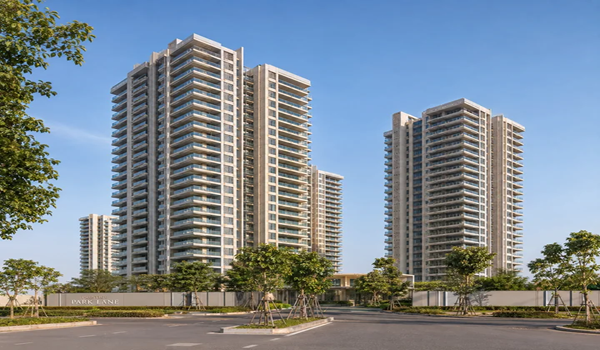
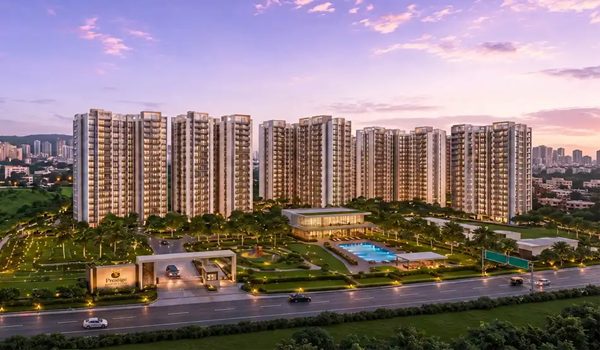
Prestige Group Prelaunch Project is Prestige Parklane.
Frequently asked questions
The RERA filing declares a start of 1 October 2026 and completion by 31 December 2030, a little over four years. Towers are handed over in sequence rather than all together.
Almost certainly not. Contractors move formwork, cranes and labour through towers in waves, so possession dates within one project can differ by many months.
The schedule is date-linked. By 10 October 2030 you will have paid 96.8 per cent, with the balance due on intimation of possession alongside the possession-stage charges.
Delay beyond 31 December 2030 entitles allottees to interest, or to withdraw, under the Act. Your instalments are date-linked, so they still fall due on schedule.
Through the quarterly updates the promoter must upload to the Karnataka RERA portal, and through site visits at slab stage.
The first date-linked instalment of 3.2 per cent falls on 10 December 2026, with further instalments every two months after that.