Buying property in North Bangalore: every area from Hebbal to the airport

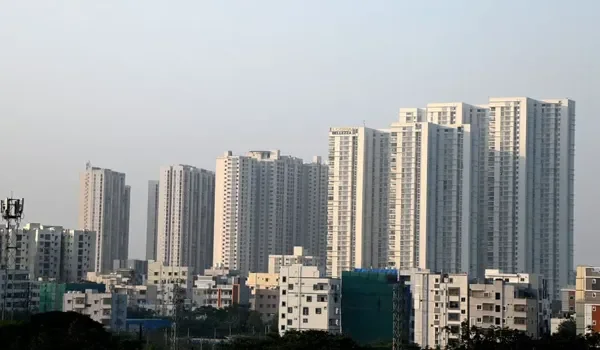
People talk about "North Bangalore" as if it were a single market. Look closer and it breaks into five quite different places. Hebbal behaves like part of the city. Devanahalli, forty minutes further up the highway, behaves like a new town still being assembled. Which end you buy at shapes your price, your commute and your risk.
Five nodes, from the city outwards
| Node | ₹ per sq ft, 2026 | Character |
|---|---|---|
| Hebbal / Jakkur | 9,000–13,000 | The junction. Manyata adjacent, mature, congested. |
| Thanisandra Main Road | 10,300 | Manyata spillover, dense apartment supply. |
| Yelahanka | 11,000–13,000 | Established township, air force station, good schools. |
| Bagalur / Shettigere | 9,300–13,250 | The new township belt. Godrej, Birla, Tata. |
| Devanahalli | 9,250 | Airport, industry, early growth curve. |
For reference, Bengaluru as a whole averages about ₹9,450 a square foot. Devanahalli sits a touch under that line. Yelahanka is only fifteen kilometres nearer the city, yet it costs 20 to 40 per cent more. You are paying for schools, shops and roads that already work. Whether that premium makes sense depends on how long you plan to hold.
Three reasons the north is not a copy of the east
Jobs here are not tied to software
Whitefield, Sarjapur and Electronic City rise and fall with the IT industry. The northern corridor draws its payroll from other places: aviation, aerospace, defence production, electronics assembly, freight and, lately, data centres. Boeing runs a 43 acre campus here. Foxconn occupies roughly 300 acres and took on 30,000 staff inside eight months. NTT operates a data centre site rated at 100 MW. When IT hiring freezes, a mix like that holds up better, because its parts do not move together.
The anchor is physically fixed
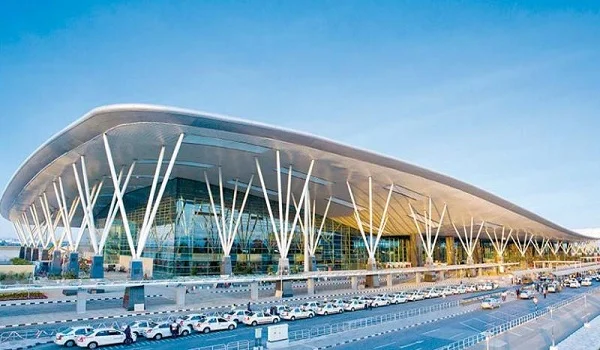
A software tenant can hand back a floor at the end of a lease. An airport cannot pack up and leave. Kempegowda has two parallel CAT-IIIB runways, a ₹19,800 crore terminal programme under way, and a 460 acre commercial district inside its fence. Boeing's ₹1,600 crore campus is equally permanent. So is a 100 MW data hall wired to its own 220 kV substation.
Much of the land came through the state
A large share of the industrial land was notified and handed out by KIADB. Zoning and title were settled by a government agency, not stitched together from private plots. Few other Bengaluru corridors started from such a tidy base.
Where each node is in its life cycle
Every Bengaluru growth corridor has gone through the same four phases.
- Arrival. A big employer or facility lands. Land is cheap and few people live nearby.
- Crowding. Builders all launch at once. Supply swamps demand, prices stall in real terms, and buyers get their best deals.
- Catch-up. Roads, metro and services open. Surplus stock clears and prices jump.
- Maturity. Growth slows to inflation plus a little. Traffic becomes the main grumble.
- Hebbal, Yelahanka and Thanisandra are in phase four. Convenient, well served, fully priced.
- Bagalur and Shettigere are deep in phase two. Three townships of over 50 acres each finish within about two years of one another, side by side.
- Devanahalli is leaving phase two for phase three. No other corridor in the city has more infrastructure money committed to it.
The weak spot: too much stock
In the April to June 2026 quarter, the north held around 28 per cent of all unsold homes in Bengaluru. Citywide, homes awaiting buyers climbed 34 per cent in a year, to about 79,200. Quarterly sales slipped roughly 7 per cent over the same period. At that pace it would take around fifteen months to sell what is already built or launched. The north saw falling sales both against the previous quarter and against a year earlier.
Strong hiring and a supply glut are happening at the same time. A pitch that mentions only the jobs is leaving out half the picture. For you, that translates into leverage. Buyers can bargain for the next few years, and a holding period of seven to ten years fits the market far better than three.
What 2026 added to the picture
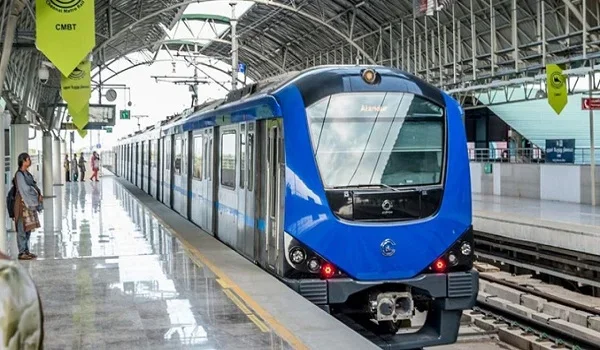
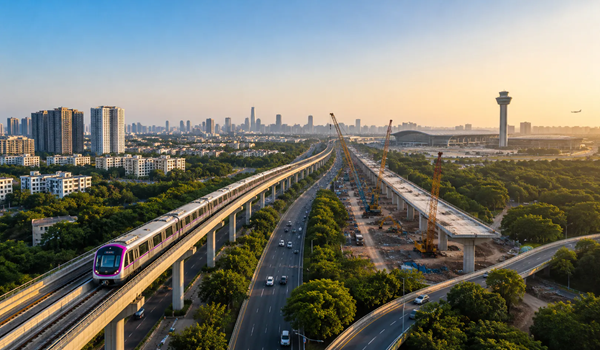
Two developments this year change how the corridor should be judged. First, infrastructure moved. The airport metro line passed 72 per cent completion in August 2026, and its Hebbal-to-airport stretch now aims for September 2027. The ring road past Devanahalli is already carrying tolled traffic.
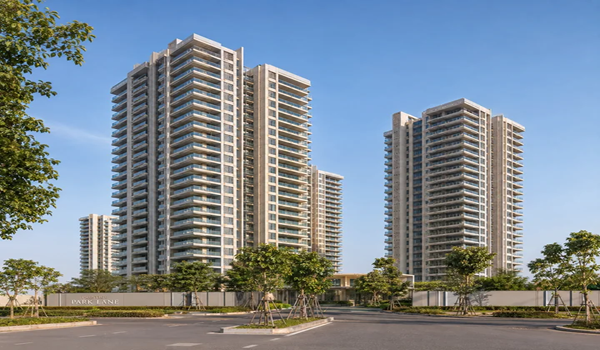
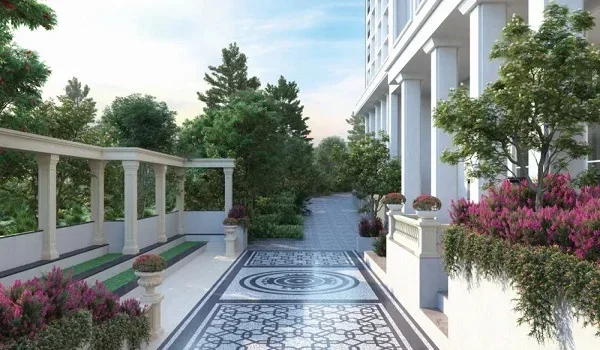
Second, projects began showing up on the RERA register. Prestige Parklane was granted registration on 15 September 2026, number PRM/KA/RERA/1251/309/PR/150926/008941. Registration means a buyer can check carpet areas, the promoter's name, the approving body and a completion date against a government record instead of a sales brochure.
Matching a node to a buyer
Pick Hebbal or Yelahanka when you want schools and hospitals in place today, you work around Manyata, and you are content with slower price growth.
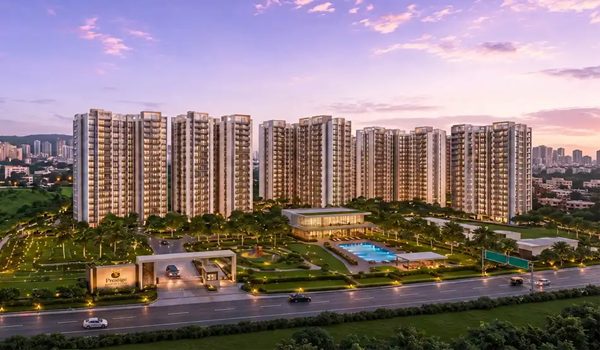
Pick Bagalur or Shettigere when a big registered township with a fixed completion date appeals, and you can live with many similar flats coming to market at once.
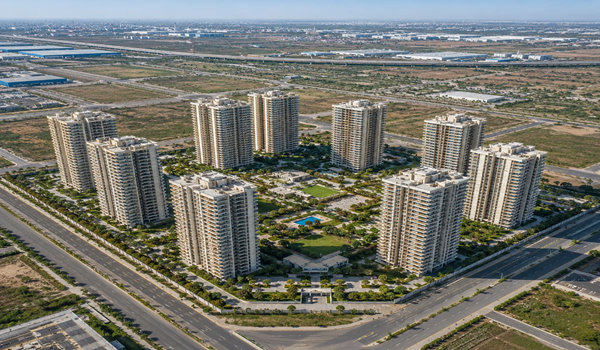
Pick Devanahalli when your job is on the corridor or you fly a lot, you want the cheapest way into the city's most invested belt, and you can wait for the new infrastructure to open. Across all five, a quick two-year flip is the wrong plan.
Frequently asked questions
It carries the most committed public and private spending in the city, and jobs that are not dependent on IT. It also holds the biggest pile of unsold homes. A long holding period is essential.
East Bangalore is established and priced for it, with growth tied to IT. The north is cheaper per square foot and earlier in its cycle. Short horizons suit the east; long ones suit the north.
Roughly ₹9,250 at Devanahalli, rising to ₹13,000 or more in parts of Hebbal and Yelahanka. The citywide average is close to ₹9,450.
Yelahanka and Thanisandra if you need facilities now. Bagalur, Shettigere and Devanahalli if a lower entry price and future growth matter more than immediate convenience.
Because it is earlier in its growth. Fewer shops and hospitals exist yet, and the metro is still being built. The lower price is what you are paid for waiting.
Yes. Bengaluru has around fifteen months of unsold stock, and the north holds the largest slice of it. That tilts negotiations toward buyers for now.