Maintenance charges and the residents association: the twenty years after handover
The purchase gets all the attention. The twenty years afterwards are what you actually live with. They are governed by a residents association, a maintenance charge and a corpus most buyers never ask about.
What you pay, and what it covers
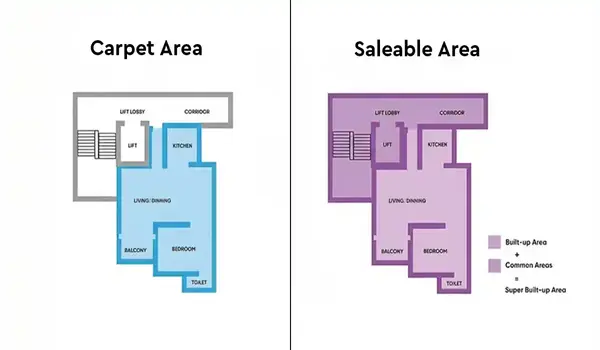
Maintenance is normally charged per square foot of saleable area per month. At Prestige Parklane the fact sheet sets advance CAM at ₹120 per sq ft covering 24 months, which works out at ₹5 per sq ft per month.
| Configuration | Saleable area | Monthly | Annual |
|---|---|---|---|
| 1 BHK | 567–571 sq ft | About ₹2,850 | About ₹34,200 |
| 2 BHK | 828–880 sq ft | About ₹4,400 | About ₹52,800 |
| 3 BHK 2T | 1,445–1,469 sq ft | About ₹7,250 | About ₹87,000 |
| 3 BHK 3T Large | 1,757–1,801 sq ft | About ₹9,000 | About ₹1,08,000 |
Over twenty years, before any increase, the largest 3 BHK figure exceeds ₹21 lakhs. It belongs in the purchase decision rather than being discovered afterwards. The charge typically covers common area electricity and water, lift maintenance and the sewage treatment plant. It also funds generator running and servicing, security, housekeeping, landscaping, the clubhouse, and the association's administration and insurance.
The corpus, which is different
A one-time maintenance corpus, at Parklane ₹60 per sq ft, is a reserve rather than a fee. It is held by the association for major capital work: lift replacement, waterproofing, repainting the towers, resurfacing roads. It is refundable and passes to the buyer on transfer of the unit.
On an 880 sq ft 2 BHK that is about ₹52,800. On a 1,445 sq ft 3 BHK it is about ₹86,700. The question worth asking is whether the corpus is adequate. A community that under-collects at handover faces a special levy in year eight when the lifts need work. Special levies are where residents associations tear themselves apart.
The other charges that land at possession
Maintenance is not the only thing collected at handover, and the total surprises people. On the Parklane fact sheet, BESCOM and BWSSB are each charged at ₹75 per sq ft plus 5 per cent GST. Generator charges add ₹85 per sq ft plus 5 per cent GST. Add advance CAM at ₹120 per sq ft plus 18 per cent GST, and the corpus at ₹60 per sq ft.
| Charge | 2 BHK, 880 sq ft | 3 BHK, 1,445 sq ft |
|---|---|---|
| BESCOM, incl. GST | About ₹69,300 | About ₹1,13,800 |
| BWSSB, incl. GST | About ₹69,300 | About ₹1,13,800 |
| Generator, incl. GST | About ₹78,500 | About ₹1,28,970 |
| Advance CAM 24 months, incl. GST | About ₹1,24,600 | About ₹2,04,600 |
| Maintenance corpus | About ₹52,800 | About ₹86,700 |
| Total at possession | About ₹3.95 lakhs | About ₹6.48 lakhs |
These sit outside the headline price and outside your loan. Budget for them as cash.
The handover that matters more than the keys
Under Karnataka's apartment ownership framework, the developer maintains the community initially, then hands over to a residents association formed by the owners. That handover is the moment to get right, and it involves:
- The corpus, transferred in full with an accounting of what was collected and spent.
- As-built drawings for plumbing, electrical, fire and drainage. Without these, every future repair starts with exploratory work.
- Warranties and AMCs for lifts, pumps, generators, the STP and fire systems.
- The occupancy certificate and sanctioned plans.
- Utility accounts transferred into the association's name.
- An audited account of maintenance collected and spent during the developer's period.
Communities that do not insist on this list at handover spend years reconstructing it.
The sewage treatment plant is the real test
On the Devanahalli corridor, outside the Cauvery network, every project runs its own STP and its own water. The Parklane RERA filing records borewell as the source. That is a piece of process plant requiring trained operation and a real operating budget. Run well, you never think about it. Run badly by an association that inherited it without a budget or a manual, it becomes the defining complaint of the community. Ask who operates it after handover, under what contract, and what the maintenance charge allocates to it.
How associations actually go wrong
- Under-collection. A charge set low to look attractive at sales, then a special levy later.
- Defaulters. Every community has them, and the association's ability to recover is limited and slow. Chronic default shifts cost onto everyone else.
- Deferred maintenance. Painting and waterproofing get postponed because nobody wants to vote for a levy. Then the repair is structural rather than cosmetic.
- Capture. A small group runs the committee unopposed for years. Sometimes fine, sometimes not.
- The investor split. Owner-occupiers want to spend on amenities, investors want the charge low. In a community with a high rental share this tension is permanent.
That last one is worth modelling here. RERA records 858 one-bedroom units out of 1,788, which is 48 per cent of the project and the configuration most likely to be let.
What to ask before you buy
- Maintenance charge per square foot, and what it includes.
- The corpus per square foot, and what capital work it is sized for.
- How long the developer maintains before handover to the association.
- Who operates the STP and the water system afterwards.
- Whether the clubhouse is included or separately charged.
- What the expected owner-occupier to tenant ratio is.
And the best research available costs an afternoon. Find a completed project by the same developer on the same corridor, handed over three or more years ago, and talk to someone on its association.
Frequently asked questions
A monthly per-square-foot fee covering common area upkeep: lifts, generator, security, housekeeping, landscaping, water and sewage treatment, and the association's administration.
The fact sheet sets advance CAM at ₹120 per sq ft for 24 months, which is ₹5 per sq ft per month. On an 880 sq ft 2 BHK that is about ₹4,400 a month.
It is a reserve held by the association rather than a fee, and it passes to the buyer when the unit is transferred. It is not consumed by routine running costs.
The owners, under Karnataka's apartment ownership framework. The developer maintains the community first, then hands over along with the corpus, drawings, warranties and accounts.
The shortfall falls on everyone else. Recovery through the association is possible but slow, which is why chronic default is one of the main ways communities get into trouble.
Yes. The association sets them once it takes over, and they rise with costs. Assume increases when you model twenty years of ownership.