Should you invest in Devanahalli in 2026? Growth, risks and a quick test
Over the last five years, Devanahalli prices have risen by roughly 72.7 per cent, and by about 11.8 per cent in the most recent twelve months. At the same time, the area is sitting on a big share of Bengaluru's unsold homes, while stock grows and sales slow. Reliable sources support both facts. Analysis that shows you only one of them is not really analysis, so this page lays out both sides with numbers.
Price growth so far
| Period | Movement |
|---|---|
| One year to 2026 | +11.8% |
| Three years | +57.0% |
| Five years | +72.7% |
In early 2020, homes here sold for around ₹5,500 per square foot. By August 2026 the figure was about ₹9,250.
Figures: 99acres listing data, checked against SquareYards.
Some websites quote a 20 per cent jump in 2025 alone, or 98 per cent over five years. Those numbers tend to come from blogs close to developers. The listing-platform series is more modest and easier to defend, so this site uses it throughout.
How Devanahalli compares with other areas
| Micro market | ₹ per sq ft | Against Devanahalli |
|---|---|---|
| Sarjapur Road | 11,560 | +25% |
| Whitefield | 10,850 | +17% |
| Thanisandra Main Road | 10,300 | +11% |
| Bengaluru city average | 9,450 | +2% |
| Devanahalli | 9,250 | — |
| Electronic City | 7,450 | −19% |
Figures: ANAROCK's Bengaluru residential report for Q2 2026, and SquareYards, August 2026.
Arguments in favour
Land costs less than the money being spent on it
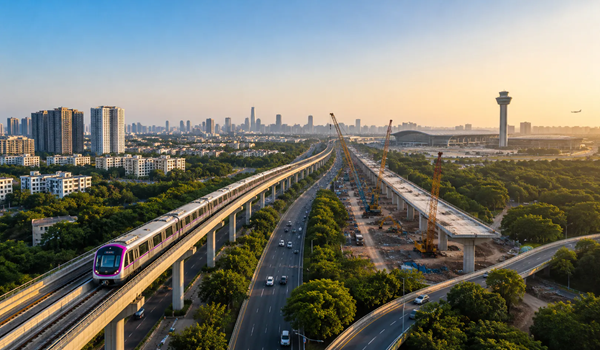
Devanahalli is priced slightly under the Bengaluru average. Yet no other part of the city has more infrastructure money committed. That money includes ₹19,800 crore for the airport terminal expansion, ₹10,584 crore for the metro, and a 460 acre business district at the airport. Foxconn and AxisCades alone have announced around ₹26,000 crore of industrial investment on top. The whole investment case rests on that mismatch between land prices and spending.
Jobs that do not depend on IT
Whitefield and Sarjapur live and die by the software industry. Devanahalli's workers are in aviation, aerospace, defence manufacturing, electronics assembly, logistics and data centres. That wider spread makes the area less exposed if one sector stumbles.
Infrastructure you can use today
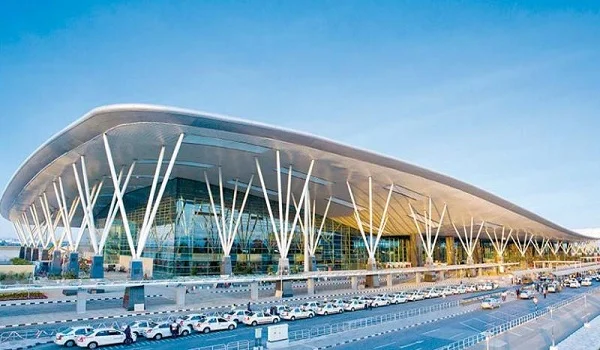
The airport already runs two independent parallel runways. It handled 44.47 million passengers in FY 2025-26, and Terminal 2 is open. The Satellite Town Ring Road section from Doddaballapur Bypass to Hoskote passes Devanahalli and already charges tolls. These are facts, not forecasts.
Employers with money sunk into the ground
An IT company can give up an office floor easily. Boeing, though, has a 43 acre, ₹1,600 crore campus. Foxconn has 300 acres and 30,000 staff. NTT runs a 100 MW data centre with its own substation. Investments that large rarely leave.
Projects now carry official registration
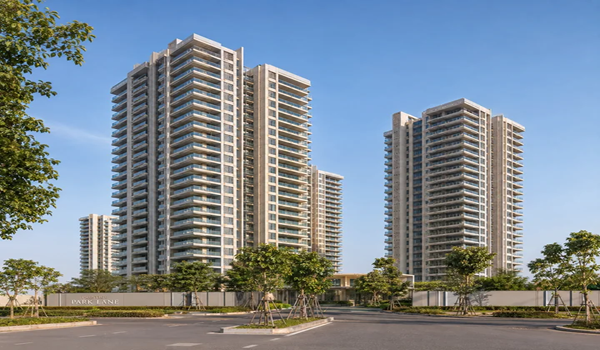
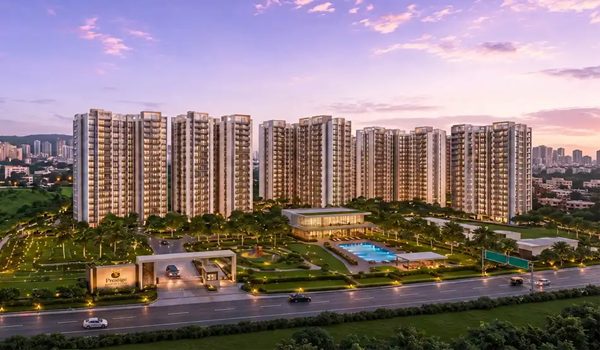
On this corridor, government filings are starting to replace brochure promises. Prestige Parklane received Karnataka RERA registration on 15 September 2026, number PRM/KA/RERA/1251/309/PR/150926/008941. Its completion date is recorded as 31 December 2030. For an investor, that makes the timeline both checkable and enforceable.
Arguments against
Too many unsold homes
In Q2 2026, North Bengaluru held about 28 per cent of the city's unsold housing. Across Bengaluru, unsold stock rose 34 per cent in a year to roughly 79,200 homes, while quarterly sales dropped about 7 per cent. That is close to fifteen months of supply. ANAROCK's figures show sales in the north falling both quarter on quarter and year on year.
Many large developers at once
Birla has 52 acres here, Godrej 62, Tata 70, Embassy 288, Total Environment 115 and Sumadhura about 100. Brigade is building across a 130 acre township. When so many big builders launch in one area together, buyers hold the bargaining power for several years.
Metro dates keep shifting
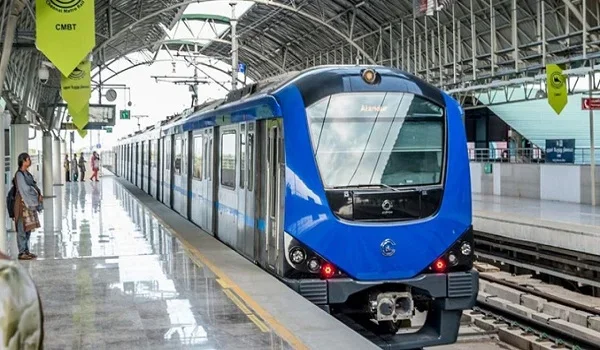
The completion target has changed three times. It moved from December 2026 to June 2026, then later to December 2027. In August 2026 it moved again, to March 2028 for the full line, with the airport section now due separately in September 2027. Construction is 72 per cent done and the line will open. But any plan that depends on a specific opening month is risky.
Daily services are still catching up
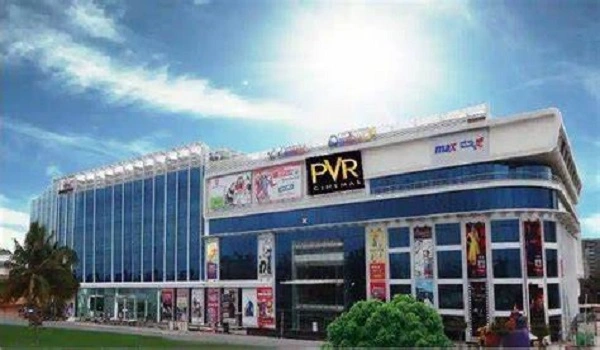
Schools and hospitals exist. Shopping barely does, and there is no significant mall. More residents will change that, but not yet. Until then, both everyday life and resale appeal are affected.
Water is the first real limit
Devanahalli is not connected to the Cauvery water supply. Parklane's RERA filing lists borewells as its water source, which is normal here. Households are arriving faster than new water supply. That constraint will bite before any other.
Rental returns are modest
On a Parklane 1 BHK costing about ₹72.4 lakhs in total, gross rental yield is around 3.0 to 4.1 per cent, before maintenance, tax and empty months. That is typical for Indian housing, but it is no reason to buy on its own. Anyone claiming these yields rival commercial property is misleading you.
What it adds up to
Devanahalli rewards patience. It is not a three-year trade. The infrastructure that should lift prices opens between 2027 and 2030. The surplus of unsold homes should clear over a similar period. Those two forces pull against each other, and the surplus is likely to ease first.
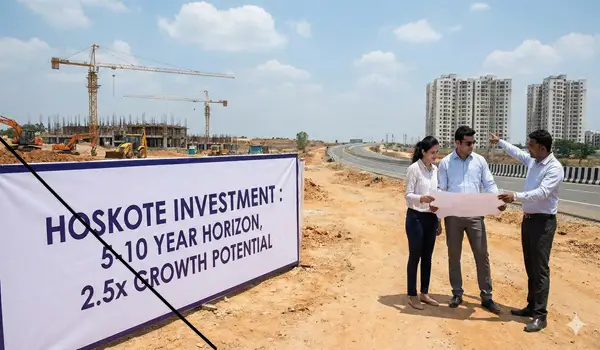
A sensible horizon is seven to ten years if you are buying for growth. If you are buying a home near your job, the horizon matters much less. The buyers most likely to be disappointed are those who expected quick gains because an advert promised a fifteen-minute airport drive.
Four questions before you buy
- Could you hold the property for at least seven years without being forced to sell?
- Does the purchase make sense on price growth alone, with rent treated as a bonus?
- Could you cope if the metro opened a year or two late?
- Can you afford the full cost, including registration and possession charges, not just the advertised price?
Four yes answers make Devanahalli a reasonable long-term bet. Two or fewer suggest a shorter plan or a more established area.
Frequently asked questions
For a seven to ten year hold, the case is solid, backed by heavy infrastructure spending and varied employers. For a short hold, it is weak because of surplus supply and metro delays.
About 72.7 per cent in five years, 57 per cent in three years and 11.8 per cent in the past year, reaching roughly ₹9,250 a square foot by August 2026.
At present, yes. North Bengaluru held about 28 per cent of Bengaluru's unsold homes in Q2 2026, with roughly fifteen months of supply citywide.
A Parklane 1 BHK yields about 3.0 to 4.1 per cent gross on its full cost, and roughly 2.3 to 3.3 per cent net.
Most likely, prices stay flat in real terms for two to three years while stock clears, then rise around the time new infrastructure opens from about 2028.
Water supply lagging behind new homes, competing supply, and further metro delays. None is fatal over a long hold, but each can stretch how long you need to wait.