Why half of Prestige Parklane is one bedroom
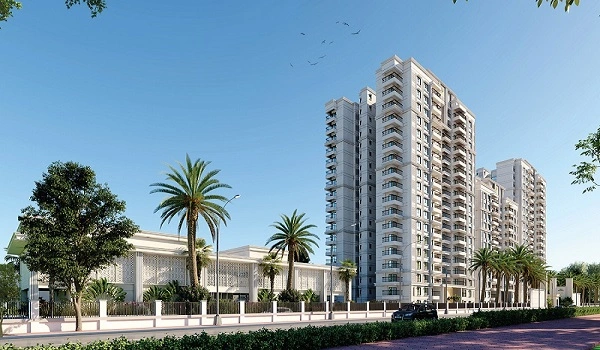
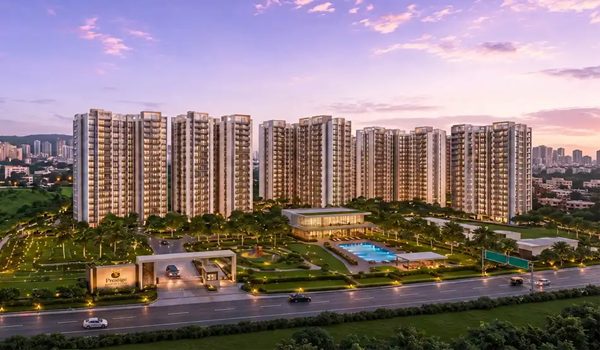
Prestige Parklane is marketed as a premium development. Its unit mix says something more specific than that. It is worth reading carefully before you buy anything here.
The short answer
858 of the 1,788 apartments at Prestige Parklane are one-bedroom homes. That is 48 per cent of the project, and an unusual proportion for a branded development at this price point. It tells you the developer is underwriting a manufacturing and airport workforce rather than a family market. That has consequences for anyone buying here, whether to live in or to let.
The mix, in numbers
| Configuration | Saleable | Units | Share | From |
|---|---|---|---|---|
| 1 BHK | 567 – 571 sq ft | 858 | 48% | ₹65 L |
| 2 BHK | 828 – 880 sq ft | 195 | 11% | ₹90 L |
| 2 BHK large | 1,087 – 1,103 sq ft | 196 | 11% | ₹1.15 Cr |
| 3 BHK, all layouts | 1,445 – 1,801 sq ft | 539 | 30% | ₹1.50 Cr |
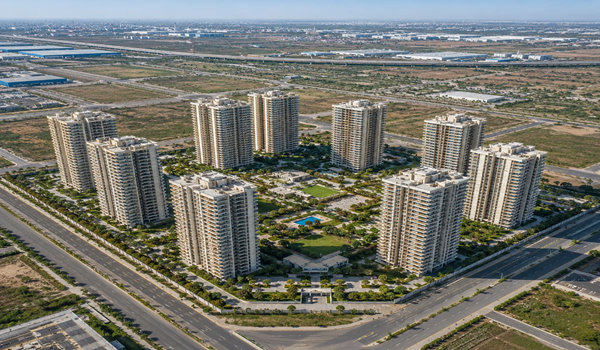
Unit counts are from the Karnataka RERA filing. Sizes and prices are from the project fact sheet. One layout accounts for nearly half the building. There is a single 1 BHK plan, repeated 858 times across nine towers. By contrast the 3 BHK is split across three published sizes and the 2 BHK across two.
The second thing the table shows is that the two bedroom is the scarcest tier, at 391 apartments between both its layouts. That is the opposite of the usual pattern, where the 2 BHK is the volume seller and the workhorse of the mix.
What a 48 per cent one-bedroom mix signals
Unit mix is the clearest statement a developer makes about who it thinks will buy. Land, approvals and construction cost roughly the same per square foot whatever you put on the plot. So building 858 compact homes instead of 400 larger ones is a deliberate bet on a specific buyer. Here that bet is legible, because the employers are on the same land.
Wistron holds 32 acres in Phase 2 of the KIADB park, the same phase as this project, for a contract laptop manufacturing plant employing about 3,000 people.
Foxconn is building on roughly 300 acres nearby against an investment near ₹20,000 crore, and hired 30,000 people in eight months against a state target of 50,000. Neither of those workforces is buying an 1,801 sq ft three bedroom. Both need somewhere to live within walking or short driving distance of a factory gate.
That is the argument for the mix, and on its own terms it is a good one. Most projects that claim walk to work are describing an office park in the same postal code. This one is describing a shift change.
If you are buying to live in it
Three things follow from living in a building that is half compact rentals. None is disqualifying, but all three are rarely mentioned.
Turnover is higher. Compact units let to a young workforce turn over faster than family apartments. Expect more moving vans, more unfamiliar faces in the lift, and less of the settled neighbour dynamic a 3 BHK heavy project produces. Whether that reads as lively or unsettled is temperament.
The residents association will be split. If a large share of the 858 one-bedrooms are held by investors rather than occupiers, the association is voting between two groups with different interests. Owner occupiers want amenity spend. Investors want the monthly charge held down. That tension is normal in India and manageable, but it is sharper when the split is close to half.
The maintenance arithmetic is lopsided. The fact sheet sets advance CAM at ₹120 per sq ft for 24 months, which is ₹5 per sq ft a month, charged on area. So a 571 sq ft owner pays roughly ₹2,855 a month and an 1,801 sq ft owner pays roughly ₹9,005, for identical access to the same clubhouse and the same pool. That is standard practice, not a flaw. But where the smallest unit is 48 per cent of households, it is worth understanding who funds what before the first association meeting.
If you are buying to let
The case is stronger here, and it is the case the mix was designed for. Demand is specific rather than speculative: Wistron and Foxconn workers, airport ground staff and crew who need short report times, and the wider KIADB workforce. At ₹65 lakhs the ticket is the lowest branded entry on the corridor. That keeps the capital at risk modest and the yield arithmetic more forgiving than a ₹1.89 crore three bedroom.
The honest counterweight is competition from inside your own building. When you come to let, or to sell, you are not competing with the corridor. You are competing with up to 857 identical apartments in the same nine towers, on the same amenities, with the same view of the same park.
Nothing differentiates your unit except floor, facing and what you are willing to accept. In a soft letting market that is a real constraint on pricing power. North Bengaluru held about 28 per cent of the city's unsold inventory in the second quarter of 2026.
They will also arrive together
One timing point compounds this, and it follows from the RERA filing. The declared completion date is 31 December 2030. The 858 one-bedroom homes do not trickle onto the rental market over several years. They reach handover at broadly the same time. A single micro-market absorbing several hundred near-identical units in one window will clear them, but not at the rent the first listing hopes for. If your case depends on day-one yield, model a slower lease-up than a corridor average suggests.
What it means for the 3 BHK buyer
The mix is usually discussed from the one-bedroom buyer's side. It matters just as much from the other end. If you buy a three bedroom here, you are a minority owner in a building designed around a different buyer. There are 539 of you and 858 of them. Three consequences follow, and none of them appears in a brochure.
- You fund more of the shared cost. Maintenance is charged per square foot, so an 1,801 sq ft owner contributes roughly three times what a 571 sq ft owner does for identical access.
- Your resale pool is narrower but less crowded. Fewer competing units on exit, though also fewer buyers looking at that ticket on this corridor.
- Amenity wear is driven by the majority. The pool and gym load reflects 858 compact households, not the 539 larger ones.
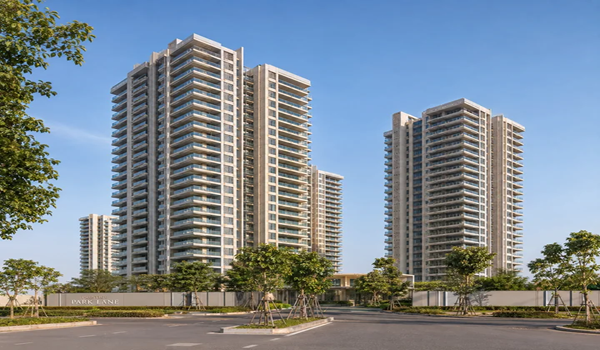
None of that makes the three bedroom a poor purchase. At ₹10,381 per saleable square foot it is the best value in the building. But buy it understanding the community you are joining, rather than the one the marketing photographs suggest.
How it compares on the corridor
The common claim that branded projects here do not offer a one-bedroom is not quite true, and it is worth correcting.
| Project | Offers a 1 BHK? | Smallest configuration |
|---|---|---|
| Prestige Parklane | Yes, 858 of 1,788 units | 1 BHK, 567 sq ft, ₹65 L |
| Birla Trimaya | Yes | 1, 2 and 3 BHK, plus duplexes |
| Godrej MSR City | No | 2 BHK, across 25 towers |
| Tata Carnatica | No | 2 BHK from about 1,380 sq ft |
So Parklane is not alone in offering one. Birla Trimaya does too. What separates Parklane is the proportion. Not that a one-bedroom exists in the price list, but that it is nearly half of everything being built.
Birla offers a 1 BHK inside a mix. Parklane is substantially a 1 BHK project with larger homes attached. That distinction matters more than the presence of the configuration, and no listing on this corridor draws it.
The rate is exactly what you would expect, and worse on carpet
Compact units usually carry the highest rate per square foot. A kitchen and a bathroom cost roughly the same to build whether they sit in 567 square feet or 1,801, so the fixed cost is spread over less area. That is precisely what happens here, and the registered carpet areas widen the gap rather than closing it.
| Layout | Rate per saleable sq ft | Rate per carpet sq ft |
|---|---|---|
| 1 BHK, from 567 sq ft | ₹11,464 | ₹20,124 |
| 3 BHK 3T large, from 1,757 sq ft | ₹10,757 | ₹18,156 |
| 3 BHK 3T, from 1,597 sq ft | ₹10,582 | ₹17,002 |
| 2 BHK large, from 1,087 sq ft | ₹10,580 | ₹17,997 |
| 3 BHK 2T, from 1,445 sq ft | ₹10,381 | ₹16,968 |
The one-bedroom is the dearest home in the project per square foot, on both measures. On saleable area it asks ₹11,464 against ₹10,381 for the two-toilet three bedroom. That is a spread of about ten per cent. Read on carpet, where the comparison actually belongs, the gap widens to nineteen per cent: ₹20,124 against ₹16,968.
The loading factor is what does it
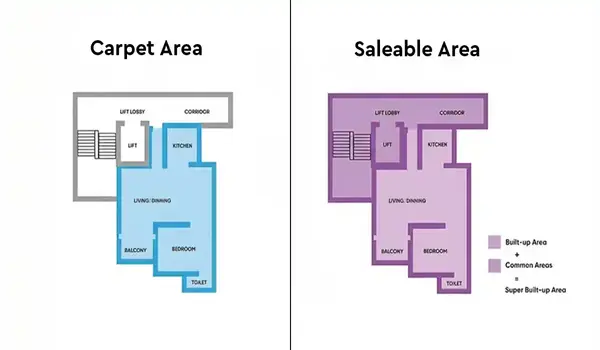
The reason is loading, which runs 43 per cent on the one-bedroom against 38.8 per cent on that three bedroom. The smallest home loses the largest share of what you pay for. A kitchen, a bathroom, a lift core and a corridor do not shrink in proportion to the flat. The RERA filing puts numbers on this. Average carpet area runs about 323 sq ft for a 1 BHK, 565 sq ft across both 2 BHK layouts and 969 sq ft across the 3 BHK range.
Exclusive balcony area is declared separately, at roughly 32 sq ft for a 1 BHK, 90 sq ft for a 2 BHK and 98 sq ft for a 3 BHK. That is not a criticism, it is arithmetic, and it applies to compact units everywhere. But it does mean the cheapest ticket is not the cheapest home.
The honest verdict
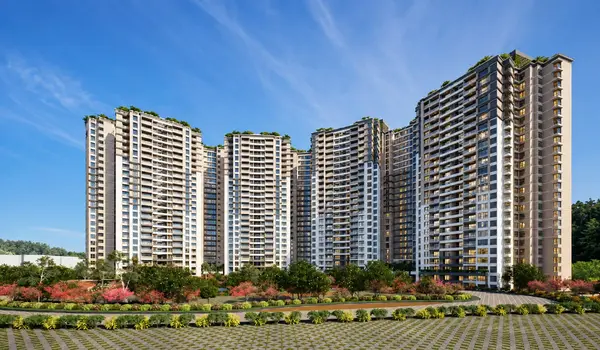
A 48 per cent one-bedroom mix is not a defect. It is a coherent response to what is actually being built around this site. It is also more honest than projects that market walk-to-work while selling only three bedrooms to families who will commute to Manyata.
But it should change how you read the word premium in the marketing, including ours. This is a workforce-adjacent project with a premium developer and a premium amenity package. It is not a family township. If you want a settled owner-occupier community with children in the same schools, the mix is telling you to look at Shettigere instead.
If you want the lowest branded entry price on the corridor, next door to 3,000 Wistron jobs and 30,000 at Foxconn, the mix is telling you this was built for exactly that. Both readings come from the same table. The developer has been clear about what it is building. It is the listings that have been vague.
The mix is now on the public record
Until registration, a unit mix was a marketing claim that could shift between launch and handover. The RERA filing of 15 September 2026 closed that gap. It confirms 858 one bedroom, 391 two bedroom and 539 three bedroom homes, 1,788 in total. It also files the carpet area for each configuration, which is what makes the rate-per-carpet column above checkable rather than estimated. If a listing quotes you a different mix, the register settles it.
Frequently asked questions
858, which is 48 per cent of the 1,788 homes. It is a single layout repeated across all nine towers.
From ₹65 lakhs all inclusive for 567 to 571 sq ft, excluding registration charges.
The demand case is specific and real, built on the Foxconn, Wistron, airport and KIADB workforce. The risk is that you compete with up to 857 identical units in your own building.
The RERA filing gives an average of about 323 sq ft across the 858 units, with roughly 32 sq ft of exclusive balcony declared separately.
Because the buyer is identifiable. Here it is a manufacturing and airport workforce that needs housing near the factory gate and cannot afford a three bedroom.
The two bedroom, at 391 units across both layouts. That is the reverse of the usual pattern, where the 2 BHK is the volume seller.
No. It is high for a branded project at this price point, where the two bedroom is usually the volume seller. The mix reflects who the developer expects to buy: the manufacturing and airport workforce on the same industrial land, including about 3,000 jobs at the Wistron plant in the same phase.
Yes, on both measures. At ₹11,464 per saleable sq ft it is the dearest home in the project, against ₹10,381 for the two-toilet 3 BHK. On carpet area the gap widens to nineteen per cent, because the one-bedroom carries 43 per cent loading against 38.8 per cent.
Birla Trimaya does, alongside 2 and 3 BHK apartments and duplexes. Godrej MSR City offers 2 and 3 BHK only, and Tata Carnatica starts at a 2 BHK of about 1,380 sq ft. What is unusual at Parklane is the proportion, not the presence of the configuration.
Higher turnover, a residents association split between owner occupiers and investors, and maintenance charged per square foot so the smallest owners fund the least of a shared amenity package.
Broadly yes. The declared completion date is 31 December 2030, so they reach handover together rather than trickling out. Model a slower lease-up than a corridor average implies.