What is an encumbrance certificate? How to get one in Karnataka

An encumbrance certificate is the cheapest insurance in an Indian property purchase. It is also the document buyers most often take on trust. This guide covers what an encumbrance certificate is, how to get one online in Karnataka through Kaveri, how to read it, and the four checks that decide whether a title is safe.
What is an encumbrance certificate?
An encumbrance certificate, usually shortened to EC, is an official record of every registered transaction against a property over a stated period. That includes sale deeds, mortgages, gift deeds, partitions, releases and court attachments. If something is registered against the property, it appears here. In Karnataka the certificate is issued by the Department of Stamps and Registration. It is drawn from the records of the sub registrar with jurisdiction over the property.
What an EC shows
It shows registered transactions only. Sale deeds, mortgage deeds, gift deeds, releases, partitions, and attachments recorded with the sub registrar.
What an EC does not show
It does not show anything unregistered. That means oral agreements, unregistered agreements to sell, property tax arrears, and pending litigation that has not produced a registered attachment.
It also says nothing about who is physically in possession. A clean EC is necessary. It is not sufficient. That limitation is the reason to run an EC and a title search by a lawyer. One is not a substitute for the other.
How to get an encumbrance certificate online in Karnataka
Karnataka issues ECs through the Kaveri Online Services portal. That is the same system used for registration and guidance value lookups.
- Register on the Kaveri portal and log in.
- Choose the encumbrance certificate service.
- Enter the property identifiers: district, taluk, hobli, village, and the survey number or khata number.
- Set the search period. Ask for thirty years.
- Pay the fee. It is modest and scales with the period searched.
- Download the certificate, usually within a few days.
A physical certificate can also be obtained in person. Apply at the sub registrar office holding jurisdiction over the property. Digitally signed certificates downloaded from Kaveri are accepted by most lenders. Confirm with your bank before you rely on one.
Why thirty years, not fifteen
Fifteen years is what is commonly offered. It is not enough. A charge created eighteen years ago and never released still binds the property. A break in the chain of title two decades back is exactly the kind of defect that surfaces when you try to sell, not when you buy. Thirty years is the period a careful conveyancing lawyer works to. The extra cost is trivial against the purchase price.
Form 15 and Form 16 explained
Karnataka issues two forms, and the difference confuses people.
- Form 15 is issued when there are registered encumbrances in the period. It lists them.
- Form 16 is issued when there are none. This is what people mean by a nil encumbrance certificate or non encumbrance certificate.
A Form 16 is not automatically good news. It can also mean the search parameters were wrong. If the survey number or village was entered incorrectly, the system finds nothing because it looked in the wrong place. Check that the identifiers and period printed on the certificate match the property you are buying.
What an encumbrance certificate looks like
The certificate is a tabular document. Each row is one registered transaction, in date order. A typical row carries the date of registration, the nature of the deed, the names of the executant and the claimant, the consideration amount, and the document number. Header details sit above the table. These name the village, hobli, taluk, survey number and the exact period searched. Read the header first, because it tells you whether the search was aimed at the right property.
How to read an encumbrance certificate
Work through it chronologically and check four things.
- The chain is unbroken. Each transfer should run from the person who acquired the property in the previous entry. A gap is a question.
- Every mortgage has a release. A loan taken in 2014 should have a matching release deed. An open mortgage means the property still stands as security.
- The seller appears as the current owner. Confirm the name against the sale deed and their identity documents.
- There are no attachments. A court attachment or tax recovery notice registered against the property will appear here, and it stops the transaction.
Buying in a project rather than a resale
When you buy from a developer in a registered project, the EC on the underlying land still matters. It shows how the developer acquired the land, and whether that land carries a mortgage. Developers routinely mortgage project land to fund construction. That is normal and not a warning sign on its own.
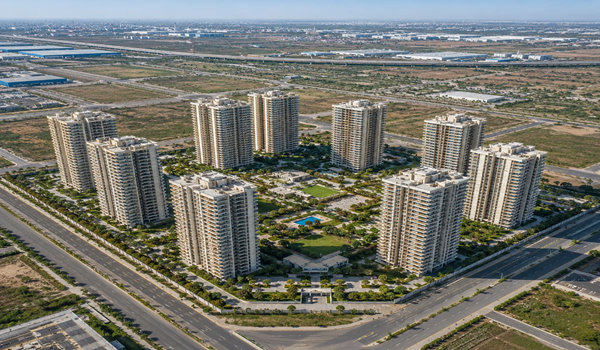
What matters is that your specific unit is released from the charge at or before conveyance. Ask for the release, or for a no objection certificate from the lender. Land inside a notified KIADB industrial area starts from a cleaner position. It is allotted by the state rather than assembled privately, parcel by parcel. Prestige Parklane sits on KIADB-approved land and is registered under RERA number PRM/KA/RERA/1251/309/PR/150926/008941, granted on 15 September 2026. Registration puts the promoter, the land details and the approving authority on a public record you can check independently.
The checklist
- Thirty year EC, not fifteen.
- Survey number, village and period on the certificate match the property.
- Chain of title unbroken.
- Every mortgage matched by a release.
- No attachments or recovery notices.
- For a project, the lender's release or no objection for your unit.
- An independent lawyer reads it, not the developer's nominated one.
Frequently asked questions
It is a list of every registered financial or legal claim against a property for a given period. If nobody has registered a claim, the list is empty.
Use the Kaveri Online Services portal. Log in, select the EC service, enter the property identifiers, choose the period, pay the fee and download the certificate.
It is a Form 16, issued when the search finds no registered encumbrance in the period. It is sometimes called a nil EC.
An online application on Kaveri usually returns the certificate within a few working days. Counter applications at the sub registrar office can take longer.
No. It records registered transactions, not title. Ownership is established by the sale deed and a lawyer's title opinion, with the EC used as supporting evidence.
Thirty years. Fifteen is the common default and it is too short to catch an unreleased charge or an old break in the chain.