Foxconn and Wistron jobs at Devanahalli: who will actually need a flat
The argument for building small flats around Devanahalli depends on a single idea: that huge numbers of people will soon work a short distance away. We no longer have to take that on faith. The hiring is already happening, so the idea can be checked.
In brief
Foxconn's Devanahalli site has taken on roughly 30,000 workers in eight months. About four in five are women, and the company aims to reach 50,000.
Wistron has 32 acres in Phase 2 of the KIADB Aerospace Park, the same phase as Prestige Parklane. Its laptop plant should employ about 3,000, with output planned from January 2026. Combined, that is a workforce bigger than many Indian towns. It is arriving within five years, next to a corridor that has little modern housing.
Foxconn and India's fastest factory hiring
Foxconn's campus at Devanahalli spans about 300 acres, backed by a reported investment of nearly ₹20,000 crore. The plant assembles iPhones. Trial production of iPhone 16 models ran through April and May, and the lines have since switched to the latest model. For housing, headcount is what counts. News reports put hiring at 30,000 in eight months, called the quickest ramp-up of any Indian factory, with 50,000 as the goal. Two aspects of that workforce matter more than its size.
Around 80 per cent are women. That is rare in Indian manufacturing, and it changes what kind of housing is needed. Expect more demand for shared rooms and hostels, more company-run buses, and more attention to safety for late shifts than a mostly male plant would bring.
Most roles are on the assembly line. This point is often skipped when job numbers are shown to property buyers. Line wages cannot cover a private flat renting for ₹20,000 a month. These workers mostly live in shared rooms, hostels, or nearby villages served by company buses.
What a mostly female workforce means for homes
The 80 per cent figure deserves more than a quick mention. It shapes what sort of housing the corridor needs, and where it should be.
Safety decides location. For someone finishing a late shift, a short, well-lit trip home matters more than a small saving on rent. Living close to the factory becomes a safety benefit.
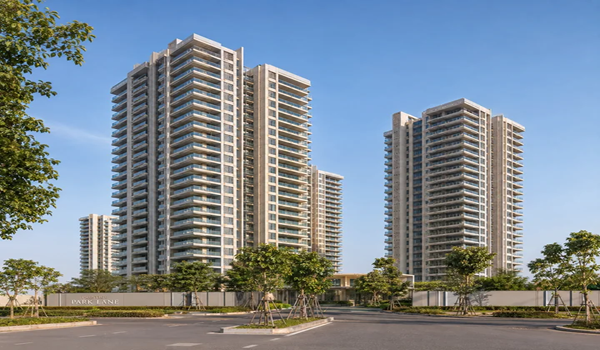
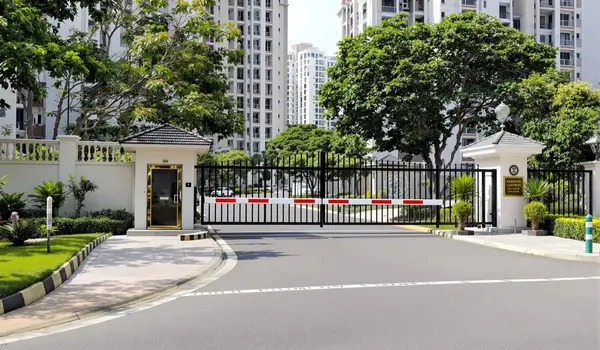
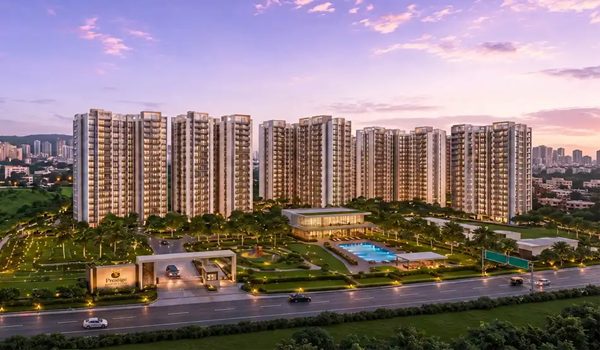
Gated communities become more attractive. Controlled gates, guards and CCTV answer a genuine worry for these workers and their families. Parklane's specification lists security cabins at every entry and exit, with CCTV covering the main gates.
Shared housing comes first. Many young workers start in shared or company-arranged rooms. As they are promoted to supervisory jobs, or start families, some move into private one-bedroom rentals nearby.
Buses widen the catchment. Company transport lets staff live further away, which spreads demand thinly unless a project is truly close to the plant. For a buyer, the takeaway is this. A mostly female workforce strengthens the case for secure, compact homes near work, but it turns into private rental demand gradually as people progress.
Wistron, the employer on the same land
Foxconn has the bigger numbers. Wistron is the nearer neighbour. Wistron signed with the Karnataka government in February 2024 and was given 32 acres in Phase 2 of the aerospace park at Devanahalli. That is the same phase as Prestige Parklane, which the RERA filing places at Plot No. 24 in Phase 2.
The factory makes laptops under contract, and around half its output is meant for export. It should employ roughly 3,000 people. Shapoorji Pallonji was chosen as builder, with production planned from January 2026.
About Wistron's investment figure
Reported numbers vary a lot, so treat them with care. Estimates of Wistron's committed investment range from roughly ₹350 crore to several times that. The difference depends on whether a report means the first production line or the full site. We will not choose one figure and present it as certain. The 32 acres and around 3,000 jobs appear consistently in every source. The investment amount does not, so be wary of any website that states it precisely.
What 3,000 jobs in the same phase really means
It does not mean 3,000 home buyers. The sensible way to size demand is to break the headcount down, rather than simply repeat it.
| Layer | Rough share | Housing they take |
|---|---|---|
| Assembly and line staff | The large majority | Shared accommodation, hostels, employer transport from villages |
| Engineers, supervisors, quality and maintenance | A modest fraction | One and two bedroom private rentals. This is the addressable demand. |
| Management and expatriate staff | Small | Larger units, serviced apartments, or city living |
A factory of 3,000 people might therefore produce a few hundred households wanting a private one or two bedroom flat. Add Foxconn, the aerospace firms and the airport, and that figure grows large. But if you treat every single worker as a likely tenant, you overstate demand roughly tenfold.
Other employers on this land
The aerospace firms pay professional salaries, and they arrived first. Boeing, Airbus, Safran, Collins Aerospace, Dynamatic Technologies, Wipro Aerospace, Centum Electronics, Sasmos and Rossell Techsys operate in or next to the park, along with Shell's technology centre. This combination sets the corridor apart from a typical suburb. No single employer decides the area's fortunes. Aerospace, electronics, data centres and an international airport tend to face difficulties at different times and for different reasons.
The next wave of hiring
Foxconn and Wistron are not the end of the story. Two more sources of jobs are lined up. AxisCades announced a ₹6,000 crore aerospace hub on 200 acres near Devanahalli in May 2026, projecting 20,000 direct jobs. It is still at an early stage.
Bengaluru Airport City is building a 2 million square foot business park for global capability centres. Office roles there tend to pay enough to rent, and later buy, a private flat. Both matter more for home buying than factory headcount, because their salaries sit higher.
What these jobs support, and what they do not
They support the flat mix. Of Parklane's 1,788 flats, 858 are one-bedroom homes, 48 per cent of the project, as its RERA filing confirms. That is a deliberate bet on this workforce, and an understandable one.
They do not guarantee a rental return. Job growth puts a floor under demand. It does not tell you what rent hundreds of identical flats can fetch when they all finish together. Sales pitches often blur those two things.
They do not remove timing risk. Foxconn is hiring today, and Wistron has reached production. Prestige Parklane was registered with Karnataka RERA on 15 September 2026 and lists completion for 31 December 2030, more than four years after hiring started. By then the workforce will probably be bigger, which is the bet. It remains a bet on the corridor, though, not a certainty.
Hiring and housing on different clocks
Jobs and homes arrive at very different speeds, and the gap between them is the central investment question.
| Period | Employment | Housing at Parklane |
|---|---|---|
| 2024 to 2026 | Foxconn hires 30,000; Wistron allotted and building | Registered September 2026 |
| 2027 to 2029 | Foxconn towards its 50,000 target; aerospace tenants expand | Under construction |
| End 2030 | A larger, more settled workforce | Declared completion |
By handover, today's new recruits will be a more settled workforce. Some will have moved up into supervisor and engineer roles that can afford private rent. That is the quiet case for buying ahead of the workforce rather than after it.
Checking the claims yourself
Job figures on property websites go out of date quickly and get copied without checks. Two habits help.
Every job figure should come with a named source and a date. Be cautious about any number missing either.
Tell committed money apart from announced money. A memorandum of understanding is just a press release. Allotted land with a contractor already appointed is a real building site.
Frequently asked questions
About 30,000, recruited in around eight months, with 50,000 as the target. Roughly 80 per cent are women, and the plant makes iPhones.
Yes. Wistron holds 32 acres in Phase 2 of the KIADB aerospace park, the same phase as Parklane. Its laptop factory should employ about 3,000.
Not directly. Most factory staff work on the line and cannot pay ₹20,000 a month. Real demand comes from engineers, supervisors and managers.
Estimates vary widely, from about ₹350 crore to much more. The reliable facts are the 32 acre plot in Phase 2 and roughly 3,000 expected jobs.
Boeing, Airbus, Safran, Collins Aerospace, Dynamatic Technologies, Wipro Aerospace, Centum Electronics, Sasmos and Rossell Techsys, as well as Foxconn and Wistron.
Its size and makeup. With most workers women and many on late shifts, secure homes near the factory are valuable, and demand grows as staff are promoted.
Its RERA filing gives completion by 31 December 2030. The local workforce should be larger and more settled by then.