Data centre noise near homes: decibels, generators and the checks to make
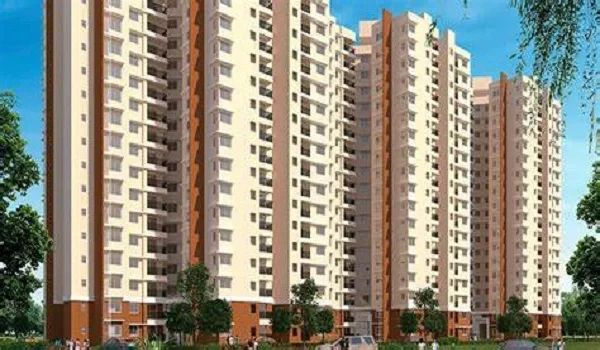
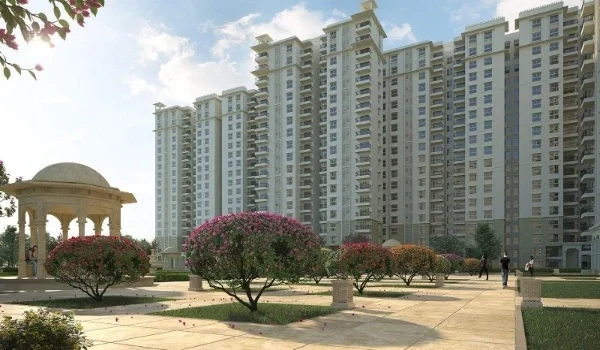
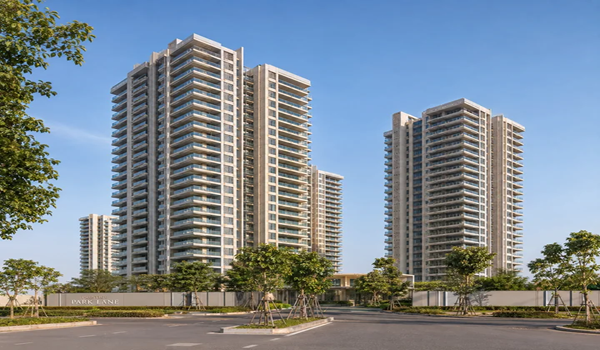
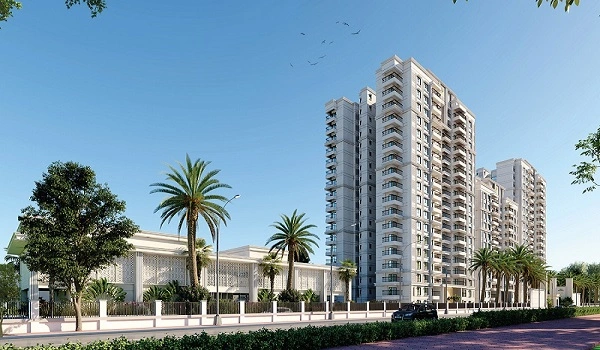
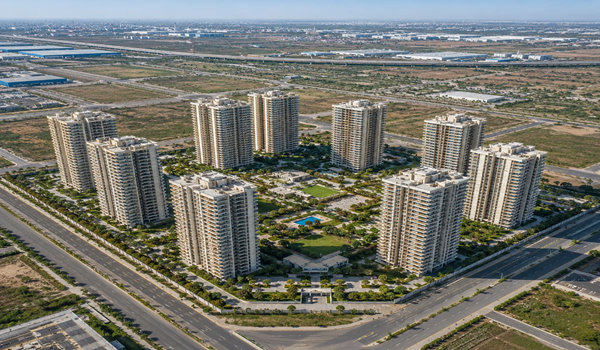
On the Prestige Parklane master plan, nine housing towers and three planned data centres face each other across a central avenue. All of it sits within 32.26 acres. Buyers raise one worry about this more than any other: will the data centres be noisy? Sales material tends to reply that data centres are quiet. That is roughly right, yet it gives you nothing to verify. This guide replaces the slogan with figures and checks.
In brief
Data centres do make sound. Most of it is a steady, moderate hum that fades fast as you move away. The real issue is the backup diesel generators. They sit idle most of the time, but they are switched on for routine tests, and they are loud while running.
In day-to-day running, a data centre releases no fumes, draws little traffic, has no shift changes and sees few trucks. As industrial neighbours go, few are gentler. Its sound comes in two forms. Cooling machinery hums without pause, and generator tests add short bursts of much louder noise. Rules cover both, instruments can measure both, and you can listen to both on the site before you pay a rupee.
Where the sound comes from
A data centre campus has a handful of noise sources. For people living nearby, they are far from equal.
- Chillers and cooling towers. These create the constant background. Big air-cooled chillers measure about 85 dB(A) at close range, and they never switch off, since servers make heat all day and night.
- Air handling units. Also constant, though usually softer than chillers. Designers tend to shield them behind the building itself.
- Server fans. In the halls they can pass 90 dB(A), so some staff wear ear defenders. The halls are sealed, though, so almost none of that escapes outdoors.
- Transformers. They give off a hum near 120 Hz. The level is modest, but the low pitch makes it more noticeable than the figure implies.
- Backup diesel generators. The noisiest item. Without an enclosure, one gives off about 95 to 105 dB(A) at a metre. They stay off normally, but get started and run under load for scheduled tests.
The first four are steady, predictable and fade well over distance. Generators cause most complaints, so question them directly.
How distance changes the figures
A decibel reading means nothing unless you also know how far away it was taken. Outdoors, sound loses roughly 6 dB each time the distance from its source doubles. That simple rule explains most of what follows. Start with a cooling tower giving 85 dB(A) at one metre. Here is what the rule predicts further out.
| Distance from source | Approximate level | Similar everyday sound |
|---|---|---|
| 1 m | 85 dB(A) | A truck passing at the roadside |
| 10 m | 65 dB(A) | Normal talking nearby |
| 20 m | 59 dB(A) | A busy open-plan office |
| 40 m | 53 dB(A) | A calm office |
| 80 m | 47 dB(A) | A reading room |
| 160 m | 41 dB(A) | A quiet bedroom |
Keep two limits in mind. These figures assume open ground with nothing in the way. Real sites have buildings, soft ground, trees and echoes, which can raise or lower the result. Also, noise rarely comes from one machine. Three data centres mean many units, and their sound combines.
Even so, the pattern stands. Space between source and listener is the cheapest, most reliable way to cut noise. A wide avenue and a planted buffer achieve more than any promise written into a brochure.
Generator tests: the noise people hear
Data centres keep standby power because an outage is the one thing their customers will not accept. To be sure the generators work, operators start them and run them under load. Tests usually happen weekly or monthly, last from thirty minutes to two hours, and take place in office hours.
India's rules for generators
Indian limits are detailed, and tougher than many buyers assume. Central Pollution Control Board rules cap diesel sets of up to 1000 kVA, built from 1 January 2005, at 75 dB(A) measured one metre from the enclosure. Cutting a bare 95 to 105 dB(A) down to 75 takes serious hardware.
- A factory-fitted acoustic enclosure that removes about 20 to 30 dB.
- A silencer on the exhaust that removes at least 25 dB.
- Vibration isolators between the generator frame and the floor.
- An acoustic housing on every set larger than 5 kVA.
You can read the complete rules on the Central Pollution Control Board website. Now apply the distance rule to a compliant 75 dB(A) set. At ten metres the level is near 55 dB(A); at forty metres, near 43 dB(A).
On paper that looks fine. What actually decides your experience is the generator yard's position, how many sets start together, and whether tests happen by day or by night. Request the test timetable in writing. The question is fair, and a refusal to answer is telling.
Generators on the housing side
Talk about this site nearly always centres on the data centre generators. The residential side will run generators too. The specification includes a generator for shared areas. It also offers full 100% backup to every flat for an extra charge, listed on the fact sheet at ₹85 per sq ft plus 5 per cent GST. Powering 1,788 flats plus lifts, pumps and common spaces needs large generator capacity of its own.
Those sets need testing too, and they could be nearer the towers than anything on the business side. That adds two questions. Where will the housing generator yard be, and when will it be tested? This is not cause for alarm. It just means checking both halves of the site with equal care.
Low-frequency hum and misleading readings
Property sites rarely mention this. Yet it explains why data centre noise has caused bitter disputes abroad. Most noise readings use dB(A). That scale intentionally reduces the weight given to deep sounds, since human ears pick them up less easily.
It suits traffic and speech. It suits cooling equipment poorly, because fans and transformers put most of their energy into exactly those deep tones. At 63 Hz, the A scale cuts about 26 dB compared with 1 kHz, while the C scale cuts under 1 dB. One sound can therefore differ by around 25 dB between the two scales.
What that difference means for residents
Deep sound carries further than higher tones. It passes through walls and windows more easily, and people find it more irritating at the same reading. In US cases where neighbours complained about data centres, readings at their homes ranged from 40 to 59 dB(A). Those numbers seem harmless. Still, people described lost sleep and headaches. The meters were accurate; they simply measured on a scale that played down the problem.
When requesting a noise study, ask for results in both dB(A) and dB(C). A breakdown by one-third octave bands is better still. One A-weighted number cannot answer this question. Push back on anyone who presents it as though it can.
Which legal noise limit applies here
The Noise Pollution (Regulation and Control) Rules 2000 set outdoor limits according to the type of area. Different areas get different ceilings.
| Type of area | Daytime, 6 am to 10 pm | Night-time, 10 pm to 6 am |
|---|---|---|
| Industrial | 75 dB(A) | 70 dB(A) |
| Commercial | 65 dB(A) | 55 dB(A) |
| Residential | 55 dB(A) | 45 dB(A) |
| Silence zone | 50 dB(A) | 40 dB(A) |
The key point: the state decides which category a piece of land falls into. Parklane lies within a notified KIADB industrial area. Its RERA filing lists Plot No. 24 in Phase 2 of the Hi-Tech, Defence and Aerospace Park, approved by KIADB. Should the industrial category apply, the night limit becomes 70 dB(A), not 45.
A 25 dB gap is large
Each 10 dB increase sounds about twice as loud. A 25 dB gap therefore allows far more night-time noise before any rule is broken. That does not make the site a poor buy. Nor does anyone plan to run equipment near the limit, since modern cooling plant operates well under it.
The same KIADB zoning that permits homes beside business blocks is what made the project possible. What it does justify is a written answer on the category the Karnataka State Pollution Control Board has given this plot. Your flat being residential does not automatically mean residential limits protect it.
Aircraft may matter more
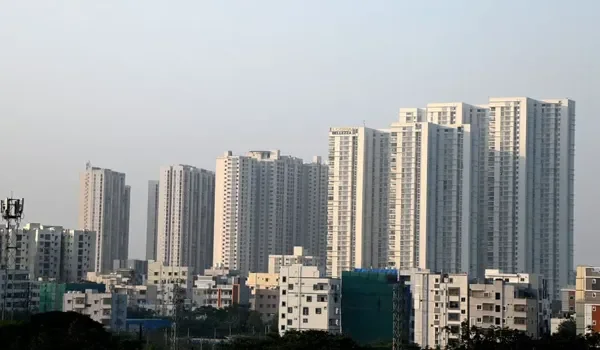
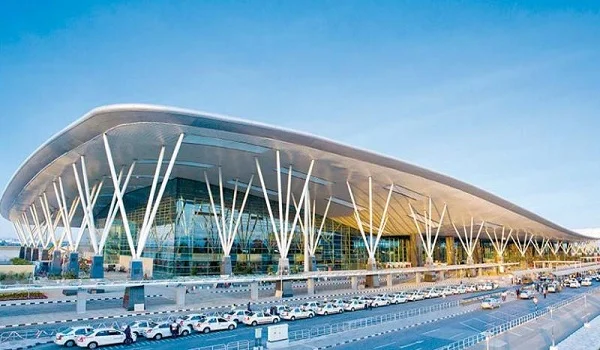
Most questions target the data centres. On a typical day, planes could be the more noticeable sound. Kempegowda International Airport's terminals are about seven kilometres away, and its two parallel runways operate all day and all night. Aircraft sound behaves differently from data centre hum in three ways.
- It comes and goes, peaking with each flight instead of staying level.
- It follows flight paths, so neighbouring towers may hear quite different amounts.
- It changes with the runway in use, which depends on wind and season.
None of this should rule the location out, since being near the airport is a big part of its appeal. It does mean your evening visit should be thorough. Spend twenty minutes or more on site. Count the planes overhead, note how loud they are, and compare them with the hum from the business side. Plenty of buyers discover that aircraft, rather than the data centres, are what they really hear.
Signs of serious noise control
If you can speak with the operator or developer about noise, these answers suggest the issue has been planned for properly.
- Chiller decks placed behind the business buildings, so the structures themselves block sound towards the homes.
- Quiet fan models on cooling equipment, cutting noise at source before barriers are needed.
- Solid acoustic screens around rooftop machinery, not only trees and shrubs.
- Generator yards set back from the housing edge, with tests allowed only in daytime.
- A noise survey before the business estate starts operating, giving a baseline for later comparison.
- A named person and a clear complaints route once both sides are running.
One measure alone proves little. Several together show that living beside the estate was planned rather than left to luck.
Inside the flat: windows make the difference
Outdoor readings are only half the story. What matters at 2 am is the level inside your bedroom. An ordinary closed window typically cuts outdoor noise by 20 to 25 dB. An open window cuts only about 10 to 15 dB.
So a steady 45 dB(A) outside becomes roughly 20 to 25 dB(A) indoors with windows shut. That is below the level most people notice while asleep. Deep hum is the exception, since low tones pass through glass more easily. Parklane's specification lists UPVC or aluminium frames with clear glass. If you like sleeping with windows open, favour flats facing the central park rather than the business estate.
How the layout helps
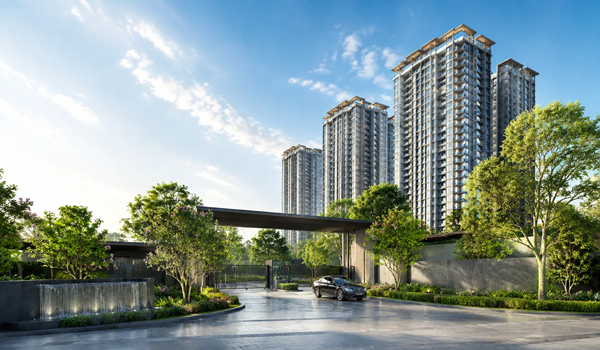
The site layout works in residents' favour, and it helps to be exact about why. A main avenue divides the 32.26 acres. The nine housing towers lie on its eastern side.
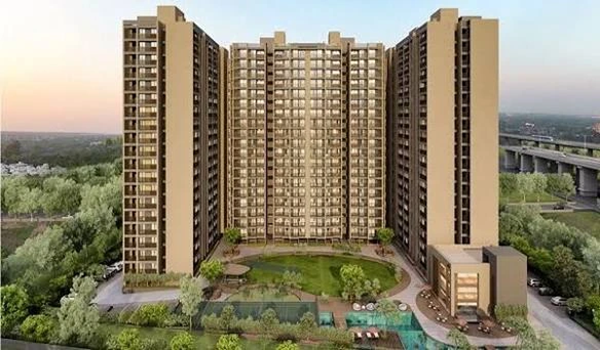
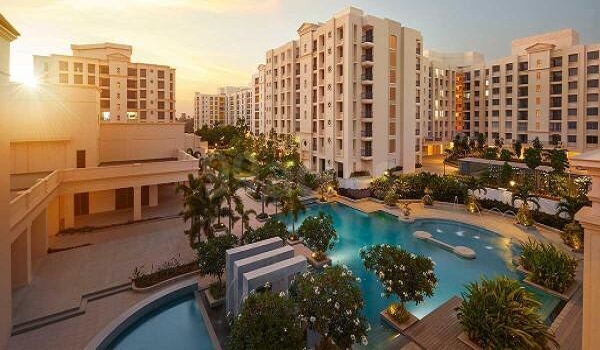
They curve around a central landscaped park with a water feature, so flats look into the park, not across at the estate. The business blocks stand on the western side. Trees line each internal road. Planting cuts sound by only a few decibels, but it hides the source from view, which makes it feel quieter.
Tower height is an advantage
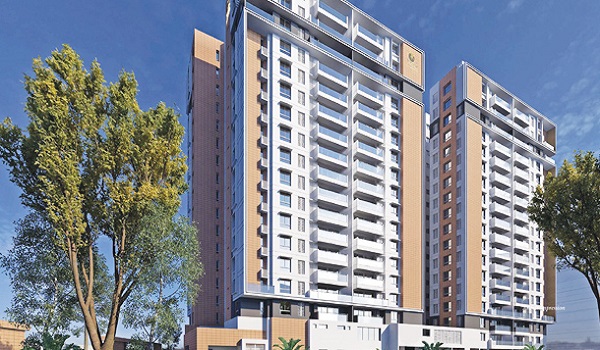
The data centres are designed with a basement, a ground floor and six upper floors, 46.20 m tall. The housing towers have three basements, a ground floor and 24 upper floors. The RERA filing gives their height as 76.55 m. Most flats will therefore sit higher than the data centre roofs, and height above a noise source usually helps.
Two caveats
The business estate also includes a warehouse block and a manufacturing block, not just data centres. A warehouse brings delivery trucks, and a factory brings shift changes. Their noise differs quite a lot from a data centre's hum. Also, actual distance counts for more than the layout. Get the measured figure.
Distances are now fixed on an approved plan
Before September 2026, any distance quoted for this site was a guess, since the layout was only conceptual. That is no longer the case. Karnataka RERA registered the project on 15 September 2026, number PRM/KA/RERA/1251/309/PR/150926/008941. KIADB approved the building plan on 13 August 2026, reference DO3-KIADB-00128/26-27/BP.
The gaps between towers and business blocks are therefore shown on an approved drawing, not a sales image. Stop asking what the gap could be, and ask what the approved plan shows. Request the figure in metres, from the nearest tower to the nearest business block.
Your checklist, on site and on paper
Eight checks, none needing specialist knowledge.
- Visit after 10 pm on a weekday. Background noise falls at night, so machinery becomes easier to hear. A daytime trip reveals little.
- Get the generator test timetable in writing, covering how often, how long and at what hour.
- Ask for generator yards and chiller decks to be marked on the layout, with their distance from the housing edge.
- Ask where the housing generator yard will be, since every flat can take full backup.
- Ask which noise category covers this plot, and which authority assigned it.
- Ask for dB(A) and dB(C) readings at the housing boundary, not only the A-weighted figure.
- Ask for the gap in metres between the closest tower and the closest business block, as drawn on the approved plan.
- Look at the approved plan yourself. Its number, DO3-KIADB-00128/26-27/BP, appears in the RERA filing.
Documents worth requesting
Answers given in a sales office are easy to forget. These papers turn them into something you can keep.
- The approved site plan showing towers, the avenue and the business blocks, with dimensions.
- Any environmental clearance or noise assessment filed for the business estate.
- The consent or category letter from the Karnataka State Pollution Control Board, if available.
- The generator specification sheet showing enclosure type and rated noise level.
Not every document will exist yet, because the business estate is still being planned. Knowing which are missing is useful too, and you can request them again before handover.
Our view
On the evidence, a data centre is a kinder neighbour than almost any other industrial building. It gives off no fumes, creates little traffic and has no shift rush. Its constant hum is well handled by distance and planting.
Generator tests are genuinely loud while they run. They are also planned, occasional and usually limited to office hours. The open questions are fewer than before. The layout is approved and public. What remains is the exact gap in metres, the noise category, and the test timetables on both sides.
So the advice stays the same, even if it sells less easily. Visit at night and put the eight questions to the developer before paying anything. Good answers make this an unusually strong address. Silence in response tells you something as well.
Frequently asked questions
They hum all night, because servers produce heat nonstop and cooling never pauses. A large chiller gives about 85 dB(A) up close, fading by roughly 6 dB per doubling of distance to near 47 dB(A) at 80 metres. You notice it most at night, when other sounds fade.
Without an enclosure, a diesel generator makes about 95 to 105 dB(A) at one metre. Indian rules cap sets up to 1000 kVA, built after 1 January 2005, at 75 dB(A) one metre from the enclosure. Tests usually run weekly or monthly in daytime. Get the timetable in writing.
That depends on the category the state assigned, so check. Residential areas allow 45 dB(A) at night; industrial areas allow 70. The project sits in a notified KIADB industrial area, so industrial limits might apply even to homes.
The usual dB(A) scale heavily discounts deep sounds, where cooling equipment puts most of its energy. A reading can be about 25 dB lower in dB(A) than in dB(C), so request both.
Generally, yes. Data centres produce no fumes or smells, have no shift changes and bring little traffic. On this plan, the warehouse and manufacturing blocks are likely to be louder.
Yes. Shared areas get generator power, and flats can take full backup for an extra charge. Ask where those generators will sit and when they will be tested.
Quite possibly. The airport terminals are around seven kilometres away, and aircraft noise is loud but intermittent. It differs by tower and runway direction, so listen during an evening visit.
A central avenue and tree-lined roads. The precise distance appears on the approved plan, DO3-KIADB-00128/26-27/BP, so ask for it in metres.
Yes. Complaints go to the Karnataka State Pollution Control Board, which enforces the noise rules. Your owners' association will carry more weight if it has baseline readings from before the estate opened.