Why three data centres sit on a residential master plan
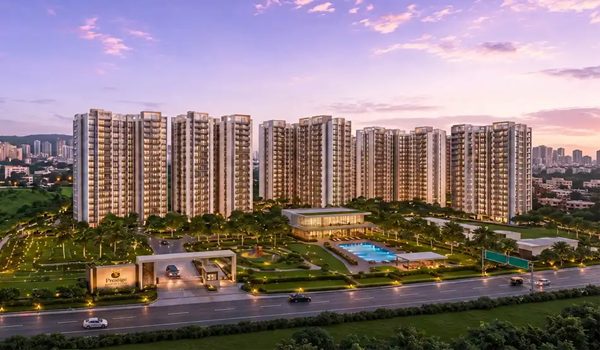
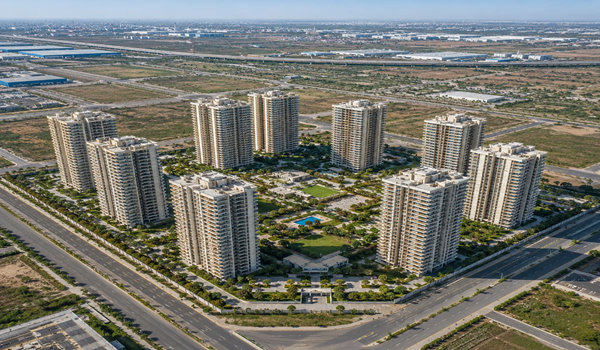
Three data centres are planned on the same 32.26 acre master plan as nine residential towers. That is an unusual combination. The first reaction most buyers have is to wonder whether it is a good idea. It is a fair question, and it deserves a real answer rather than a brochure line.
Why data centres are here
Data centres need four things, in roughly this order: large contiguous land, transmission grade power, fibre, and a jurisdiction that will permit all three. The Devanahalli corridor has an unusual amount of each.
Bengaluru's data centre market
Bengaluru is the fastest growing data centre market in India. Installed capacity was about 203 MW of IT load in 2025, forecast to reach roughly 398 MW by 2031. That is a compound rate near 24 per cent, ahead of Mumbai, Chennai and Hyderabad. Karnataka is targeting a further 1,000 MW under its data centre policy, implying more than ₹60,000 crore of investment, with a 500 MW park earmarked for Bengaluru.
The proof already operating
In December 2025, NTT opened Bengaluru's largest data centre campus at Prestige Tech Cloud, Devanahalli.
| Site | 8.5 acres, three buildings |
|---|---|
| Capacity | 100 MW |
| Critical IT load | 67.2 MW |
| Power intake | Its own 220 kV gas insulated substation, loop in loop out to the state grid |
| Certification | IGBC Platinum |
That is not a plan. It is operating.
What a 220 KV substation actually means
This is the most misused technical claim in North Bengaluru property marketing, so it is worth being precise. Ordinary residential layouts are fed at 11 kV, stepped down from a 66 kV or 110 kV distribution substation. A 220 kV intake is transmission grade. It is an order of magnitude above what housing consumes, and it is the grade hyperscale computing and heavy manufacturing require.
What it does not mean is that the apartments are powered at 220 kV. Nothing is. Your flat takes a typical sanctioned load of 3 to 5 kW off an ordinary distribution board, like every other flat in India. What it does mean is more useful than the marketing version.
A dedicated 220 KV substation inside the estate boundary lets the enterprise blocks draw from transmission directly. They do not compete with the residential precinct for capacity on a shared distribution feeder. On a corridor where industrial demand is growing this fast, that separation is worth having. It is the reason data centres can sit on this site at all.
The honest case for living next to one
From a neighbour's point of view, data centres are close to the ideal industrial use.
- Almost no traffic. A facility drawing 100 MW might employ only a few dozen people on site.
- No emissions in normal operation.
- No smells, no shift changes, and no lorries queuing at a gate.
Compare that with a warehouse, which is a lorry business, or a manufacturing unit, which is a shift business. Both are also on this master plan. That is why the boulevard and the tree lines matter, and why the western half of the site is arranged as it is.
The two real considerations
Generator testing. Standby diesel generators are exercised periodically, and that is audible. Ask about the testing schedule, and where the generator yard sits relative to the residential boundary.
Chiller noise. It is continuous but low, and it attenuates quickly with distance and planting. Neither is a reason not to buy. Both are reasons to stand on the site before you do.
What it does for the address
The strategic argument is simpler than the technical one. Employment on a residential corridor is what sustains rent and resale. Devanahalli already has aerospace and defence at the KIADB park, aviation and logistics at the airport, and electronics manufacturing at Foxconn. Adding computing infrastructure broadens that base further. Computing infrastructure is also unusually sticky.
Once a data centre is built, the capital sunk into power, cooling and fibre means it does not relocate. That is the difference between an employment base and a tenant. A software company can move floors. A 100 MW campus with its own substation cannot.
Where this sits on the site
| West of the boulevard | East of the boulevard | |
|---|---|---|
| Use | Enterprise estate | Residential precinct |
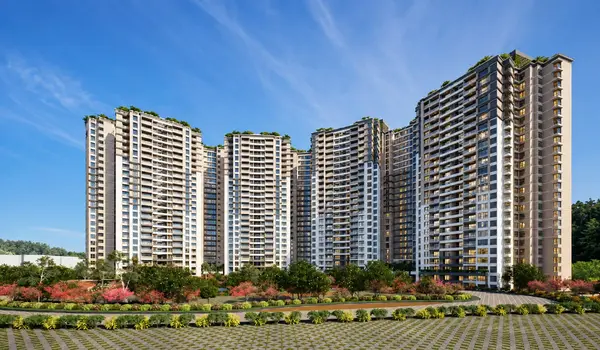
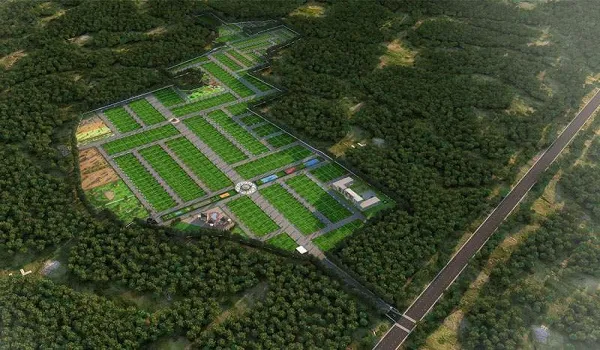
| Buildings | Three data centres, a warehouse block, a manufacturing block, a 220 KV substation | Nine residential towers |
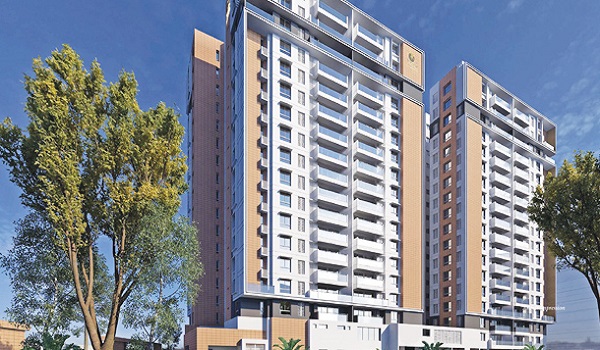
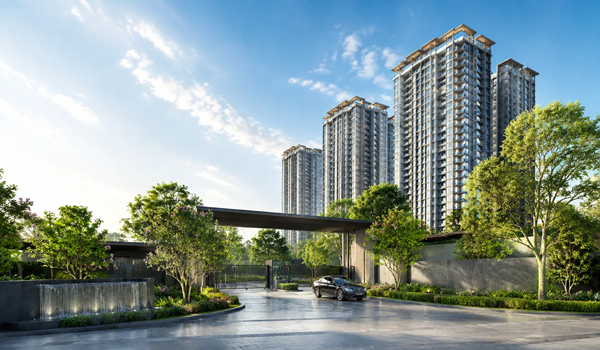
| Height | Data centres at basement, ground and six upper floors, 46.20 m | Towers at three basements, ground and 24 floors, 76.55 m |
| Land | 20.35 acres | 11.91 acres |
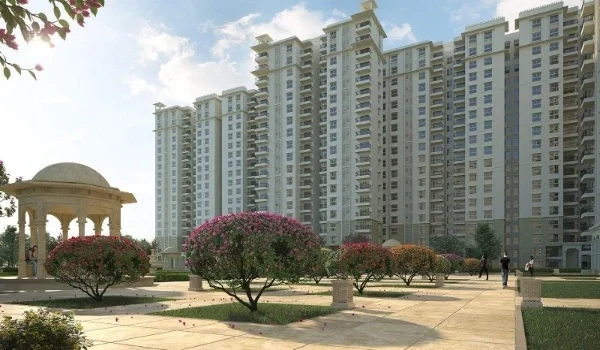
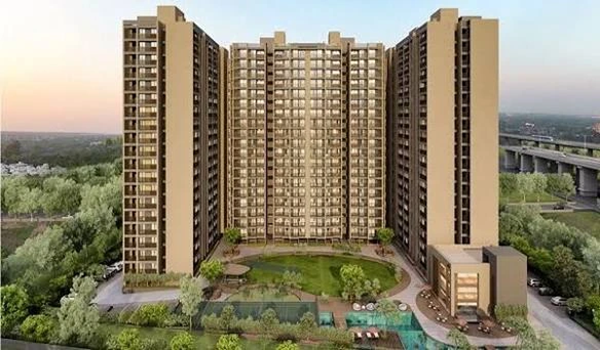
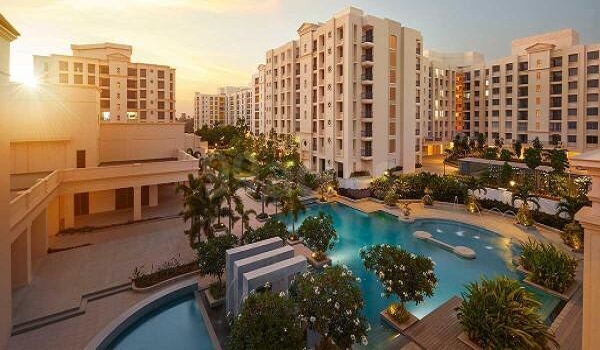
| Orientation | Faces the boulevard | Arc facing inward onto a landscaped park with a water body |
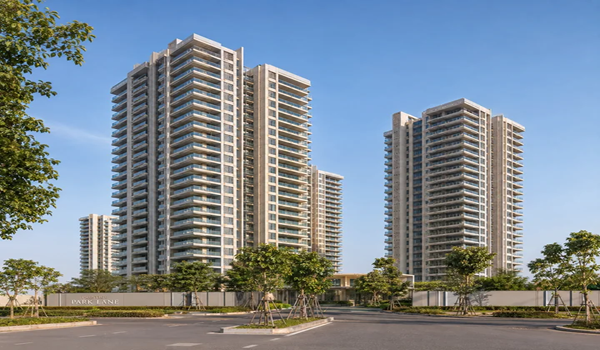
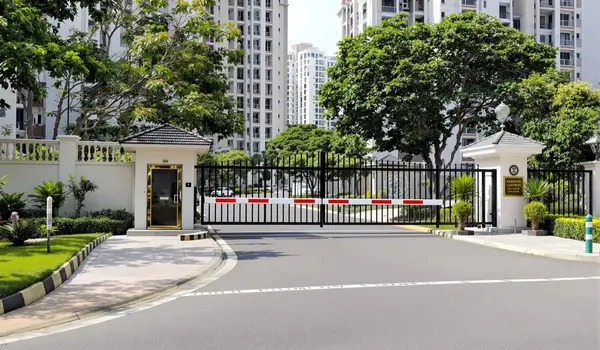
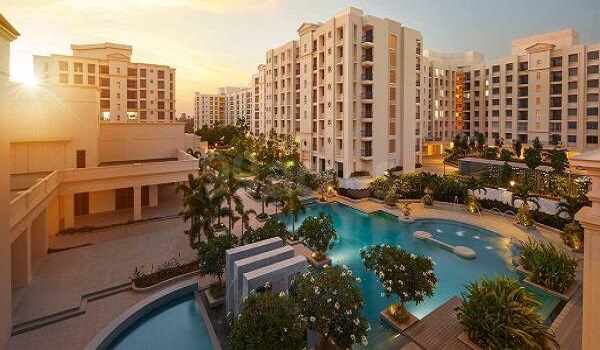
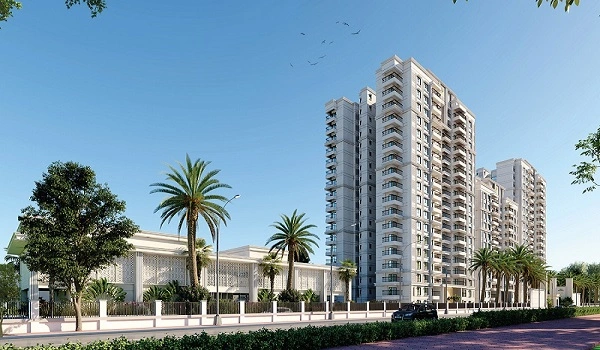
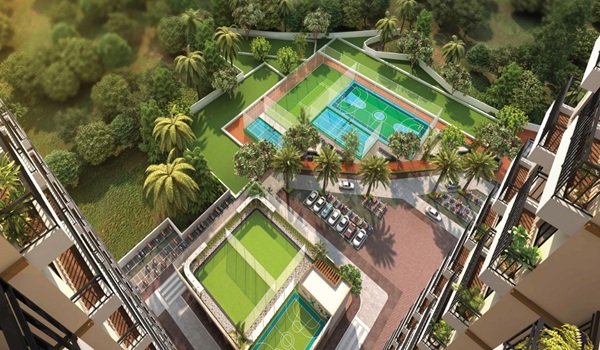
The towers face the park. They do not face the enterprise estate. Every internal road is planted on both sides. One controlled entry serves the whole 32.26 acres, with a second gate line at the residential boundary. Most apartments also sit above the enterprise roofline, since the towers rise about 30 metres higher than the data centres.
What registration now confirms
Before September 2026 the layout was a marketing drawing. That has changed. Prestige Parklane registered with Karnataka RERA on 15 September 2026, under PRM/KA/RERA/1251/309/PR/150926/008941. The filing records KIADB as the approving authority, a sanctioned plan DO3-KIADB-00128/26-27/BP approved on 13 August 2026, and a tower height of 76.55 metres.
That means the separation between the halves now sits on an approved drawing. Ask to see the sanctioned plan's setback between the nearest tower and the nearest enterprise block. Whether that separation is sufficient still cannot be settled from a page. It is what a site visit is for.
Frequently asked questions
Because the site offers what data centres need: contiguous land, transmission grade power, fibre and industrial zoning. The corridor already hosts NTT's 100 MW campus at Prestige Tech Cloud.
They are among the mildest industrial neighbours: no emissions in normal operation, almost no traffic and no shift changes. The main considerations are generator testing and continuous low chiller noise.
No. Apartments take a typical 3 to 5 kW sanctioned load from an ordinary distribution board. The 220 KV substation lets the enterprise blocks draw from transmission without competing with the homes.
They sit on the other side of a central boulevard, with planted roads between. Ask for the exact setback from the sanctioned plan, DO3-KIADB-00128/26-27/BP.
The data centres reach 46.20 metres. The residential towers reach 76.55 metres, so most apartments sit above the enterprise roofline.
Their sticky, high-capital employment tends to support rent and resale over time. The trade is an industrial rather than purely residential address, which some buyers will price against.